





















In welcome news for investors and founders, the government has announced some positive changes to their tax reforms.
First, a quick recap so the news makes sense.
Back in the 12 May federal budget, the Government announced a major change to capital gains tax (CGT) – the tax you pay on the profit when you sell an investment.
From 1 July 2027, the much-loved 50 per cent CGT discount (which lets you halve the profit you’re taxed on if you’ve held an asset more than a year) would be scrapped for individuals, trusts and partnerships and replaced with two things working together: inflation indexing (you’d only pay tax on the ‘real’ profit above inflation, much like the system we had before 1999) and a 30 per cent minimum tax rate on capital gains.
The plan sparked plenty of pushback, particularly from small business owners and the startup world worried they’d be caught in the net.
The backlash has been so severe that the Prime Minister Anthony Albanese and Treasurer Jim Chalmers yesterday announced a set of carve-outs to those plans. The government says the goal is to give investors more certainty and protect small business and innovation.
Here’s what’s new:
A big win for small business. The existing 50 per cent ‘active asset’ CGT discount, which lets small business owners halve the tax bill when they sell business assets, is being opened up to many more businesses.
The turnover threshold is jumping from $2 million to $10 million – a five-fold increase that brings it into line with the instant asset write-off. The government says the change means all 2.7 million active small businesses, representing 98 per cent of active businesses in Australia, will now qualify for the 50 per cent CGT discount on their active business assets.
A sweetener for startups. The government has released a consultation paper on a new ‘Innovative Business CGT Concession’ – a 50 per cent discount for early-stage investors, including founders and employees holding shares through employee share schemes.
To qualify, shares would generally need to be in a company less than 10 years (or up to 15 years for longer-gestation sectors like biotech), with turnover under $50 million, and held for at least five years.
Consultation is open until 10 July.
No tax on your inheritance. The government has confirmed there is no tax on inheritances or deceased estates in Australia. It has also clarified that income from testamentary trusts (trusts set up under a will) will be exempt from the new minimum tax. Handy reassurance if you’ve been hearing scare stories.
So what hasn’t changed?
For everyday investors – say you own an investment property or a share portfolio outside super – the headline reform still stands: from 1 July 2027, the 50 per cent discount is replaced by inflation indexing plus a 30 per cent minimum tax, and applies only to growth in value from that date onwards.
Any gain you’ve already built up before then will still qualify for the existing 50 per cent discount. And importantly, your family home remains completely exempt – CGT has never applied to the home you live in, and that isn’t changing.
It’s also worth remembering that none of this is law yet. The core bill is still before the Senate, and the government says it will write yesterday’s changes into that legislation in the next sitting fortnight.
Why is the government doing all this? The aim is to cool investor demand in property and tilt the playing field back towards first home buyers.
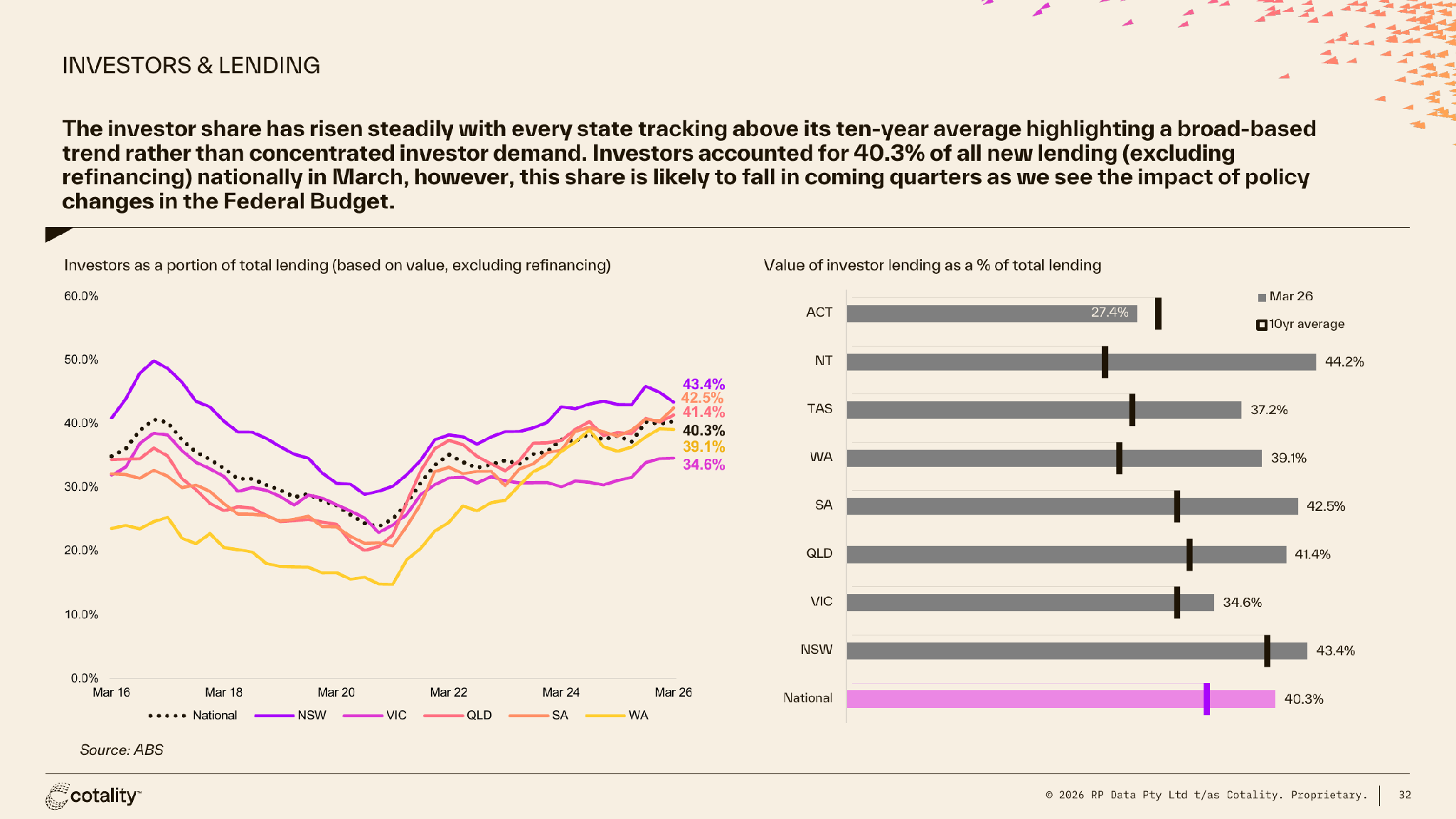
Investors have become a significant force in the market. Cotality’s figures show they accounted for 40.3 per cent of all new home loans (excluding refinancing) in March, sitting above the ten-year average across every state. Cotality expects that share to start easing.
What does it mean for your money?
If you run a small business, yesterday’s news is genuinely good. Far more business owners will now be able to halve the tax when they eventually sell up … which matters enormously for anyone whose business is their retirement nest egg.
If you’re a founder, a startup employee with shares, or an early-stage investor, it’s worth keeping an eye on the consultation process. And if you’ve been worried about tax on an inheritance, you can relax.
For ordinary property and share investors, though, the bigger 2027 change is still coming.
The key planning point is that the existing 50 per cent discount still applies to gains made before 1 July 2027, so anyone sitting on a large unrealised profit has time to think it through.
That’s the sort of decision best taken to a registered tax adviser or accountant rather than rushed. I’m not a financial adviser, and everyone’s situation is different, so get advice specific to you.