





















There’s new momentum in the construction sector, but with it comes increased costs.
You’re probably bored of me constantly saying property is all about demand and supply. If there’s strong demand to buy property but limited supply of houses on the market then values will go up. And vice versa.
The reason behind last year’s boom in property values was a critical shortage in new houses being built combined with increased buyer demand from cuts in interest rates and the introduction of the Australian Government 5% Deposit Scheme for first home buyers.
Housing on the rise
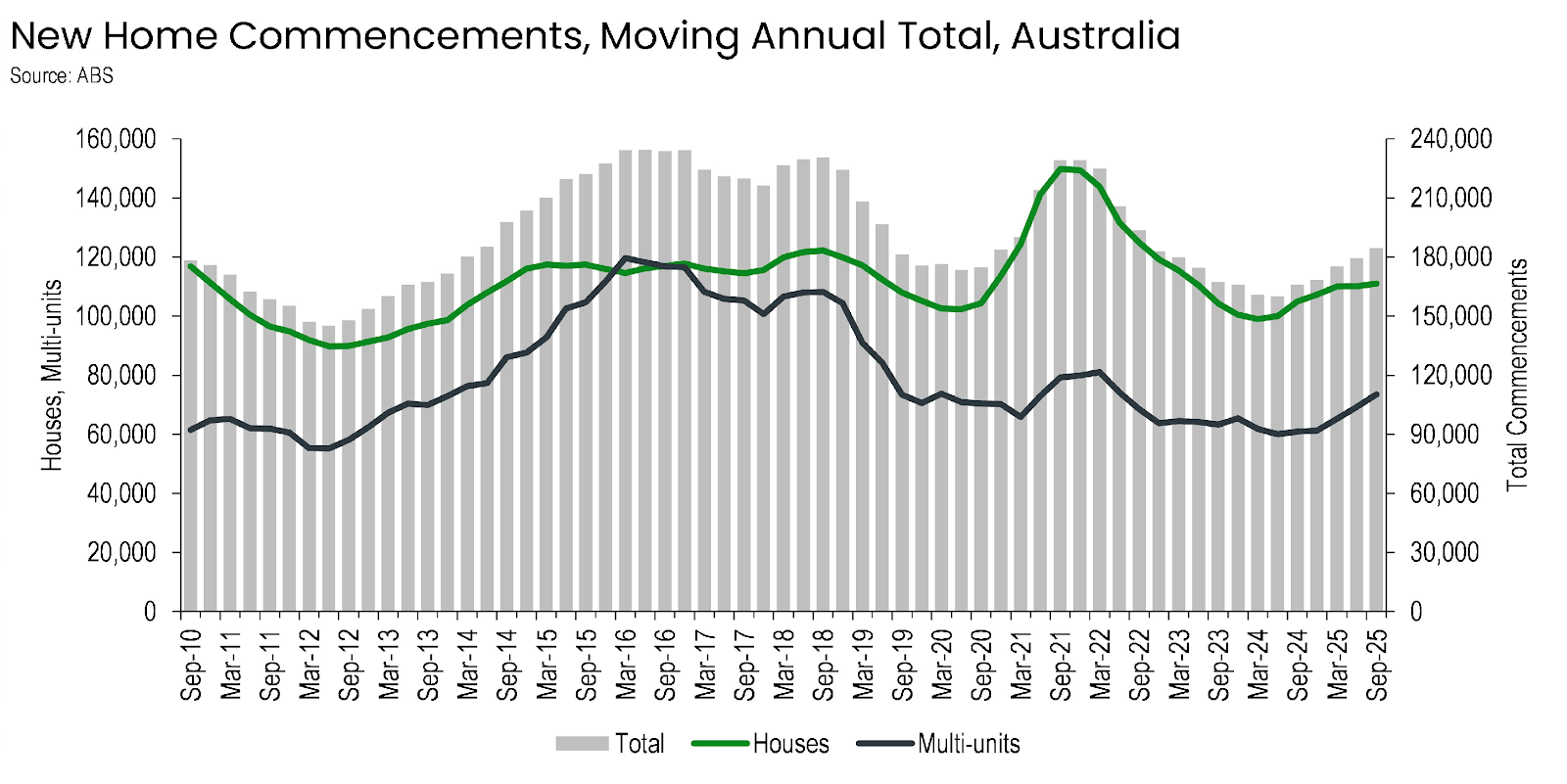
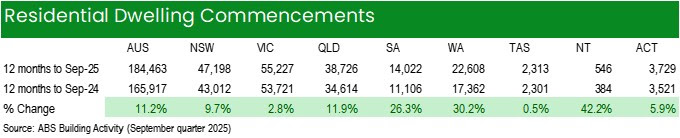
But this week the Bureau of Statistics released its Building Activity data for the September quarter which showed a 11.2 per cent increase in dwelling commencements to 184,460 new homes.
On the surface that’s great news. More housing to address the housing shortage.
The only problem is that 240,000 are needed to be built to meet the federal government’s target of 1.2 million new homes over five years … And the gap widens the longer we leave it to meet the target.
The solution has to be a whole lot of government collaboration – federal, state and local – to reduce bottlenecks for new construction.
All states lifted their housing construction numbers:
Construction costs also on the up (again)
With the increase in building activity, it looks as though building costs are on the rise as well. Again, that’s not good for inflation.
Cotality’s latest Cordell Construction Cost recorded a 1 per cent increase in construction costs nationally over the December 2025 quarter, the strongest quarterly growth of the year. The previous 2025 quarterly cost increases averaged 0.4-0.6 per cent.
Despite this big December quarter rise, annual growth over the 12 months to December was 2.5 per cent – down from the 3.4 per cent annual increase recorded at the end of 2024, and the smallest annual rise since March 2002.
Western Australia and South Australia led the nation with the strongest quarterly increases, each rising by 1.2 per cent in the December quarter. No surprises given these two states had the biggest increase in construction activity.
More broadly, all states except WA and SA remain below their pre-COVID decade-long averages, highlighting tighter construction input conditions relative to demand in these markets compared with the rest of the country.
A big increase in the price of timber and higher wages from the increase in the minimum wage were the major drivers of the December quarter rise. Price suppliers and the ongoing shortage of skilled trades will remain the primary hurdles for the sector.
With construction costs gaining momentum and housing demand remaining strong, the pressure on prices and inflation builds – much faster than new housing supply.