




















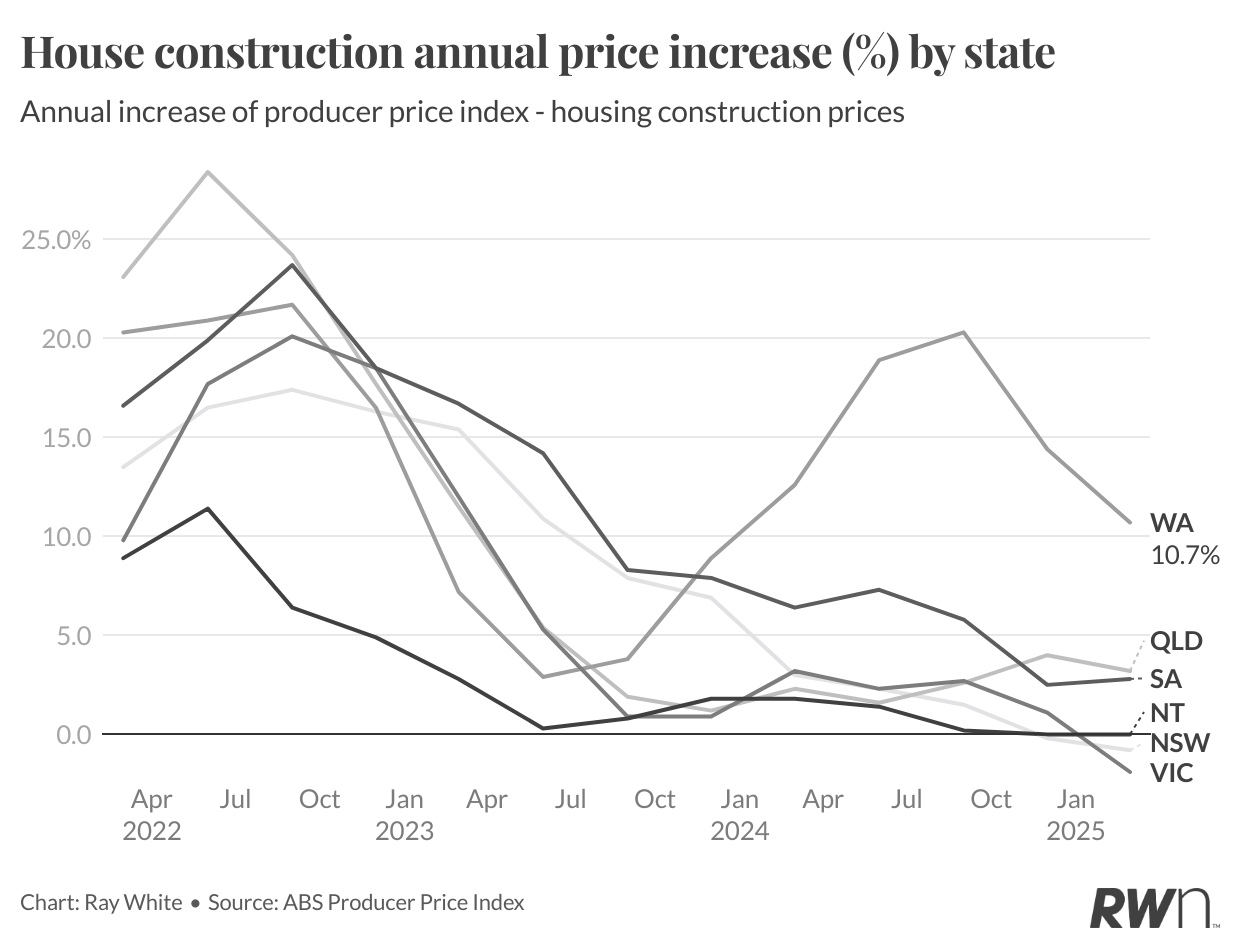
While construction costs have dramatically slowed from their pandemic peaks of 17.8 per cent annual growth in December 2022, the damage it has done to housing affordability has been severe.
While building costs have declined significantly in NSW and Victoria, they are still rising by 10 per cent in WA. This cost inflation has fundamentally altered housing construction economics, making traditional building methods increasingly unviable for affordable housing.
Nerida Conisbee, the chief economist at Ray White, has been looking for creative solutions to the housing crisis, focusing on reducing building costs.
A perfect construction storm
According to Nerida, a major challenge in reducing costs is that Australia’s housing construction industry has remained largely unchanged for decades, relying on site construction that is inherently inefficient. The traditional process requires coordinating multiple sub-contractors across numerous sites with varying conditions and logistical challenges.
It has been further compounded by labour shortages. Master Builders Australia research has found that the industry requires 90,000 new workers to meet current demand – a shortage that would require 360,000 years of training if filled entirely through traditional apprenticeships.
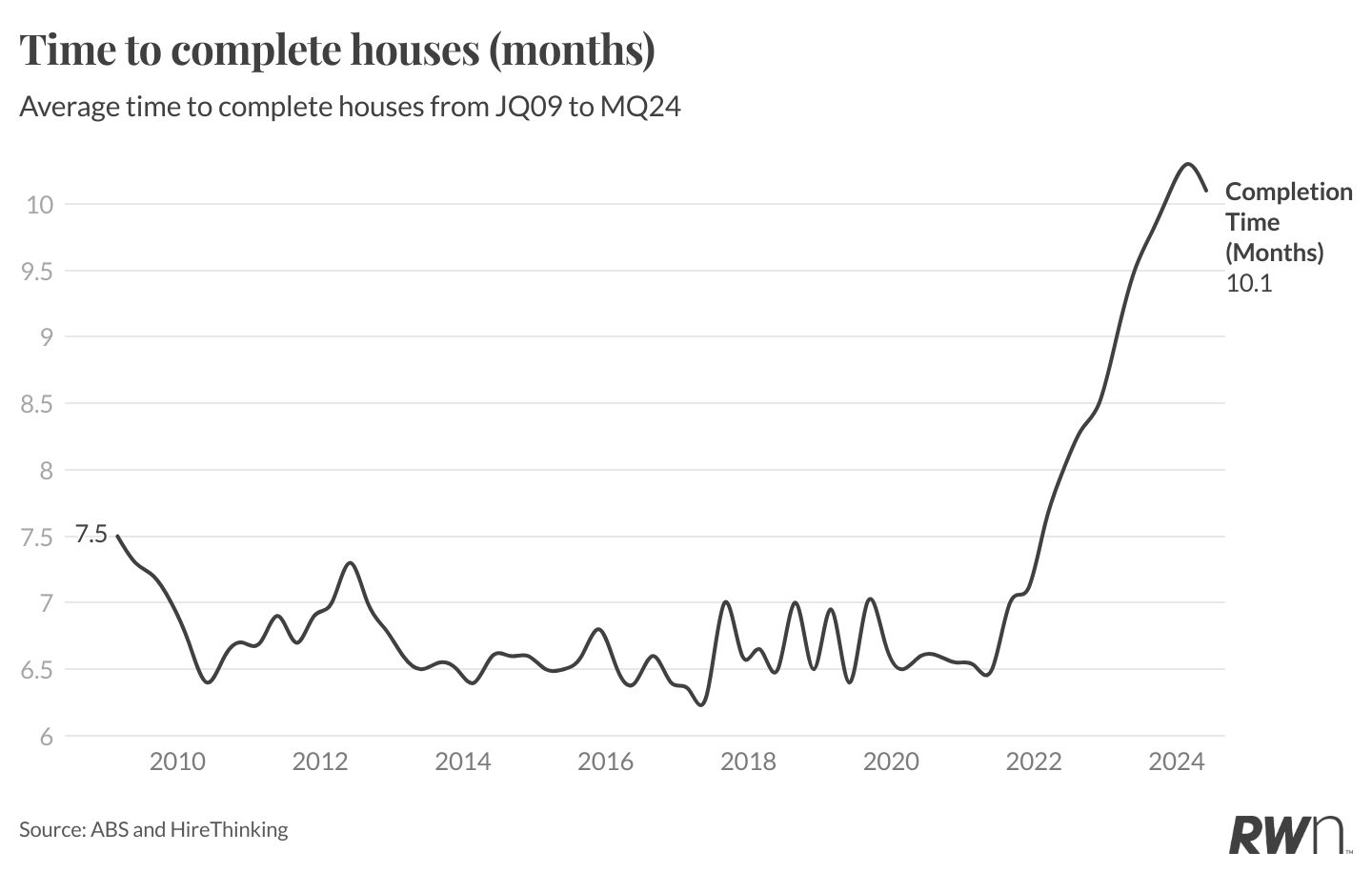
Rising costs, inefficiencies in the way homes are built and labour shortages has meant that dwelling completion times have now reached historic highs. The average house now takes over 10 months to complete, compared to 6-7 months in normal conditions. Against this background, modular construction is now emerging as a way to increase efficiency in housing construction.
Is this the answer?
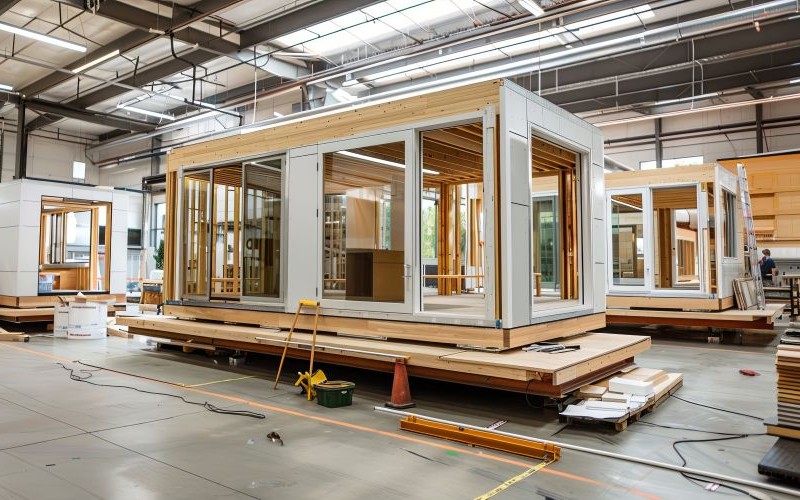
Modular construction can reduce building costs by 10-20 per cent, while cutting construction timeframes by up to 50 per cent compared to traditional methods. The fundamental reason for these savings is that a house is largely built in a factory rather than on a building site.
Factory-based construction eliminates weather delays, reduces material waste through precise manufacturing, and achieves economies of scale impossible on individual construction sites.
When components are manufactured in controlled environments, quality improves while labour costs decrease through more efficient deployment of skilled workers.
Rather than coordinating trades across multiple sites, modular construction consolidates activities in controlled environments where workflows can be optimised, materials managed efficiently, and quality assured through standardised processes.
Right now, the use of modular in building homes is growing but not dramatically so. The market has grown from $3.7 billion in 2018 to a projected $7.7 billion by 2030, representing a compound annual growth of 6.4 per cent.
Nerida is challenging the housing industry and governments to think differently in solving the housing crisis. And there is more innovation available.
- LUYTEN’s 3D printed multi-storey home in Melbourne completed construction in just five weeks, compared to the typical 8-11 months for traditional builds.
- Amazon’s $4,999 “snap-on” tiny home demonstrates how extreme standardisation can drive costs down dramatically.
For modular construction to achieve its potential, manufacturing capacity must expand significantly, requiring substantial investment in factory facilities.
In the 2025–26 Federal Budget, the Australian Government allocated $54 million to support the prefabricated and modular housing sector. Additionally, the government committed $120 million from the National Productivity Fund to incentivise states and territories to eliminate regulatory barriers hindering the adoption of modern construction methods, including modular and prefabricated building techniques.
Let’s hope it achieves the desired result, and quickly.