
















“All I want for Christmas is a rate cut,” many homeowners are saying. Well, I’m afraid that wish is looking unlikely now.
Reserve Bank Governor Michele Bullock had warned us that a September-quarter CPI trimmed mean of 0.9 per cent would be a “material miss” for the RBA’s forecasts. On Wednesday, the actual figure came in at 1 per cent – well above both the RBA’s expectations and what the markets were predicting.
It was bad …
As a result, an interest rate cut looks unlikely in the foreseeable future. There’s a real possibility we’ve hit the bottom of the interest rate cycle, and the next rate move could be UP rather than DOWN.
The RBA meets this Tuesday, and financial markets now see the chance of a rate cut at just 8 per cent – down from 40 per cent before the CPI results. The likelihood of a rate cut in December is now seen as less than 25 per cent, also down from 40 per cent.
Just in time for Christmas.
Inflation to blame
Not long ago, many economists predicted two or three more rate cuts. Now, they’re expecting just one, with rates bottoming around 3.35 per cent.
I’ve been warning that this week’s CPI would be crucial to the future of interest rates – and it has been. A higher-than-expected inflation figure could kill any chance of further cuts.
So, let’s look at the numbers:
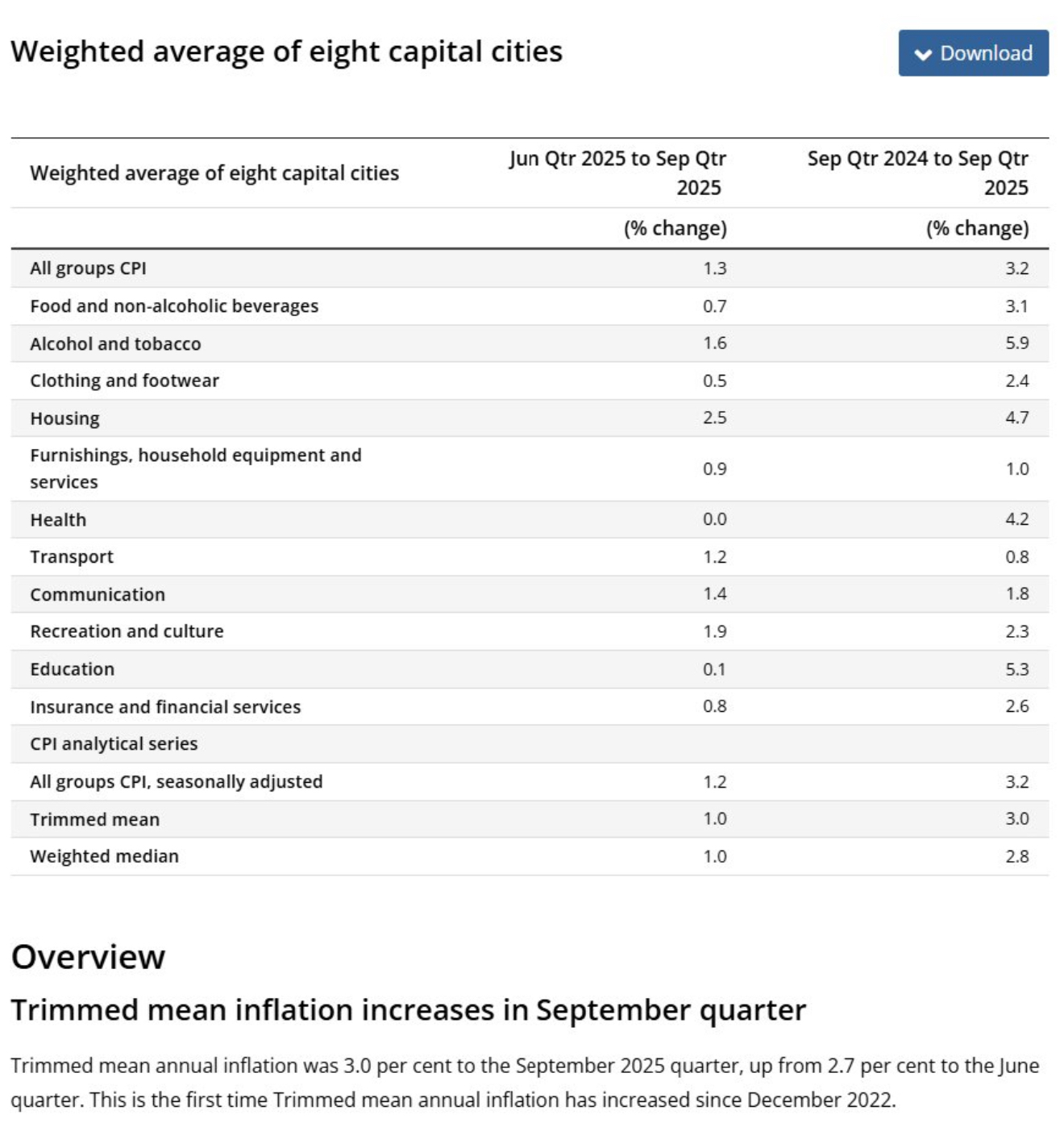
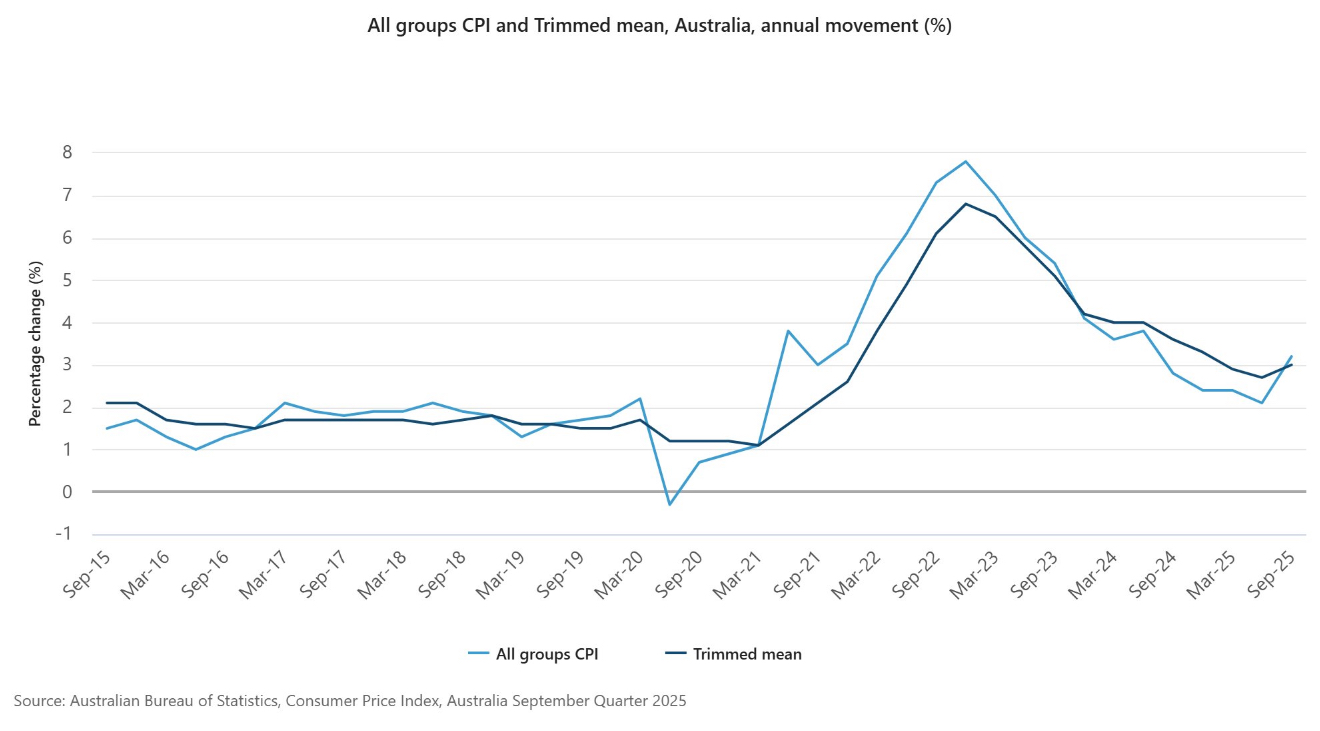
Headline consumer prices rose at their fastest pace in two and a half years in the September quarter, while the core “trimmed mean” measure of inflation climbed to the top of the Reserve Bank’s 2-3 per cent annual target band.
Headline CPI surged 1.3 per cent for the quarter – the quickest quarterly increase since March 2023 and well above economists’ forecast of 1.1 per cent. On an annual basis, headline CPI jumped to 3.2 per cent, up sharply from 2.1 per cent in the previous quarter and above the top of the RBA’s target range.
The RBA’s preferred trimmed mean measure of core CPI also increased by 1 per cent in the quarter. It’s the strongest gain in 18 months, and well above economist forecasts of 0.8 per cent.
Worryingly, the RBA had been looking for a 0.6 per cent quarterly result. The annual pace rose to 3 per cent from 2.7 per cent in the previous quarter – the first acceleration in inflation since the peak of 6.8 per cent in late 2022.
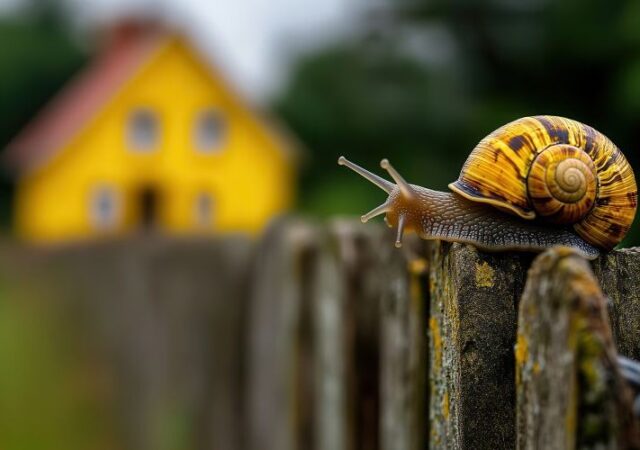
That’s what will be spooking the RBA Board: inflation has stopped slowing – it’s not stabilising. In fact, it’s turning around and gathering momentum again.
After the last two RBA board meetings, Michele Bullock in her press conferences has expressed concern that while inflation has dropped, we haven’t beaten it.
This week’s result shows that she has been absolutely right to have such doubts.
So, what’s driven this disappointing result?
Powering an inflation nation
The main contributors to the quarterly increase were housing (up 2.5 per cent), recreation and culture (up 1.9 per cent), and transport (up 1.2 per cent).
But what’s really killing any chance of an interest rate cut next week is energy prices. Electricity prices soared 9 per cent in the September quarter and have jumped 23.6 per cent over the past 12 months.
Why? Remember all those federal and state government electricity rebates designed to win votes before the last federal election? Easing the cost of living, reducing inflation and encouraging interest rate cuts …
Those rebates are now ending and you’re paying the true cost of energy. When they were introduced, Michele Bullock warned they were all smoke and mirrors and artificially reducing the inflation figure to grab votes.
The Australian Bureau of Stats commented this week:
“The annual rise in electricity costs is primarily related to State Government rebates being used up by households. State Government electricity rebates that were in place in September quarter 2024 included the Queensland $1,000 State rebate, the Western Australia $400 State rebate, and the Tasmania $250 State rebate. Over the year, those rebates have been used up and those programs have finished.”
The other big rise was in property rates and charges, which jumped 6.3 per cent – the largest annual increase since 2014.
The ABS said, “The rise reflects increases in general rates in all capital cities, higher waste levies and additional levies charged by councils.”
Merry Christmas, home owners.
Also, you might want to get your gift shopping done early at the Black Friday sales this year. It’s not looking like we’ll see another rate cut anytime soon, given where inflation is at.