





















Don’t be a ‘Kevin’ … know what your travel insurance will actually cover.
The Koch family started watching Christmas movies a couple of weeks ago. We are very much into the Christmas spirit. My all-time favourite is ELF but we’ve also been watching the Home Alone trilogy. So when I read this, it gave me a good chuckle:
New analysis by travel insurance comparison service, iSelect, reveals just how much Kevin McCallister’s iconic New York adventure would cost in 2025 compared to 1992 – that’s 32 years on, and the price jump is staggering.
But the question is, how much of Kevin’s runaway escapade would travel insurance actually cover?
Using data from The Plaza Hotel, historic records, and modern menu pricing, the study reveals Kevin’s one-night New York stay would have soared from $2,109 in 1992 to a massive $8,511 in 2025, a 303 per cent increase.
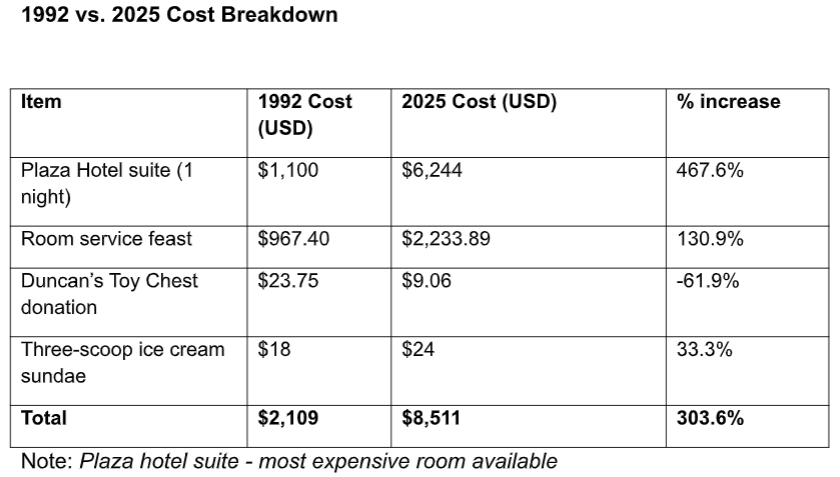
*This data does not include taxis and Kevin’s donation to Duncan’s toy store at the end of the film.
While Kevin managed to check into The Plaza using his father’s stolen credit card, a real-life runaway child running up thousands of dollars in charges would raise more than a few red flags with insurers.
Here’s what might have been covered – and what wouldn’t have been.
What travel insurance might have covered
- Lost luggage:
Kevin famously ends up in New York with only his dad’s bag. Most policies cover mishandled or lost luggage, typically up to $1,000–$3,000, depending on the policy and excess.
What would not be covered
- The $6,244 Plaza Hotel suite:
Insurers only cover necessary accommodation. Would a luxury suite at The Plaza be deemed “reasonable alternative accommodation”? Absolutely not. Kevin, and his family would be liable for the full cost.
Insurers can cover emergency accommodation, which is when a traveller is genuinely stranded due to circumstances outside their control, for example, an airline cancellation or severe weather event.
In Kevin’s case, he wasn’t stranded – he boarded the wrong flight and checked himself into a luxury suite without his parents’ knowledge. Under travel insurance policies, that wouldn’t classify his stay at The Plaza as ‘emergency accommodation,’ and the nightly rate of $6,244 would not be reimbursed.
- $2,233 worth of room service:
Travel insurance doesn’t cover voluntarily racking up room service and food charges, especially lobster, ice cream sundaes, and a cheese pizza delivered on a silver platter.
- Fraudulent use of a parent’s credit card:
Kevin uses his dad’s credit card without his permission. Insurers will not pay out for costs incurred through unauthorised spending.
- Donations and souvenirs (including Duncan’s Toy Chest):
Gifts, charity donations, and shopping are classed as personal discretionary spending and are also not covered.
How much would travel insurance cover?
In reality, almost nothing from Kevin’s $8,511 New York adventure would be reimbursed through a travel insurance policy.
The only plausible covered costs would be:
- Lost luggage reimbursement.
- Possibly emergency accommodation if he was genuinely stranded due to airline error.
- Necessary meals (not luxury room service). Reasonable meal expenses can be expensed if there are travel delays or cancellations.
So, Kevin’s real out-of-pocket bill in 2025 would still sit at around $8,000.
So, Kevin’s real out-of-pocket bill in 2025 would still sit at around $8,000.
Now, if you don’t want to “do a Kevin,” so to speak, and end up without your travel insurance paying out, read on.
Travel insurance tips for families
With thousands of families flying over the festive period, the travel insurance experts at iSelect have shared simple steps families can take to avoid unexpected costs if travel plans go wrong.
They are:
- Make sure children are correctly listed on your policy – Some policies may not cover minors who aren’t properly added, to ensure they are covered you would need a group or family policy, provided you’re all travelling together.
- Keep track of boarding passes, receipts, and baggage tags – These are often required when making claims for delays, lost items, or missed connections.
- Check the coverage for luggage, electronics, and accommodation – Travel insurance does cover these but there will be limits and exclusions. So, if you’re travelling with expensive gadgets, it’s wise to add them to your policy. Accommodation is covered mainly under cancellation or delay benefits, while luggage is covered for loss, theft, or damage.
- Understand what counts as “reasonable” expenses – Insurers won’t reimburse luxury hotels or high-end meals. Emergency cover only applies to practical and reasonable expenses.
- Contact the insurer before booking any new accommodation – If you’re stranded due to delays or cancellations, calling the insurer first helps avoid disputes or rejected claims later.
- Allow for plenty of time – Allow plenty of time when travelling during the festive season. Airports and transport hubs can be especially busy, and moving with a group often takes longer than expected. If you’re flying overseas, give yourself extra time at those busier airports to make the journey stress‑free.