




















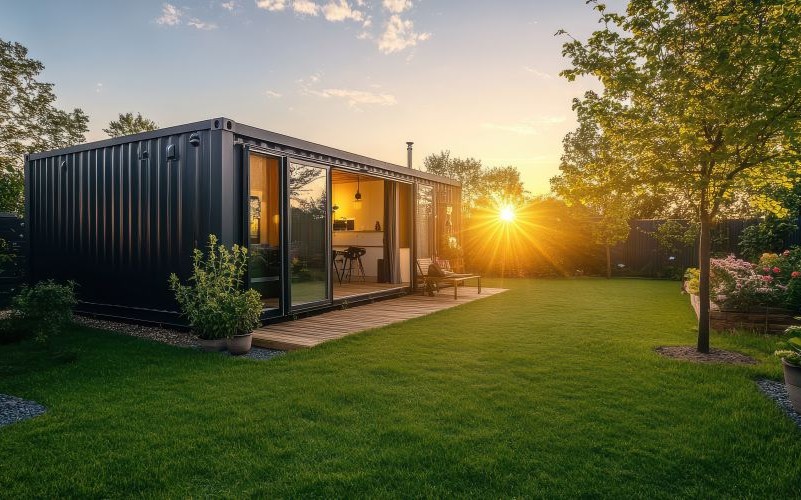
Lately, people have been telling me they’re considering adding a small dwelling to their backyard… either to generate rental income or to give their grown-up kids a place to live.
Despite rising construction costs and higher interest rates, relaxed planning laws are making these builds easier than they once were.
But is adding a granny flat or tiny home right for you? Can it genuinely help adult children navigate a boiling hot property market? Or are families being nudged into more debt to solve what is ultimately a policy problem?
Let’s take a closer look.
The micro housing trend
If you’ve noticed more backyard builds popping up in your neighbourhood, you’re not imagining it.
Australians are building significantly more secondary dwellings than ever. According to a survey of builders by the Housing Industry Association, respondents expect to build 10 times more backyard dwellings this year than they did in 2022.
Online interest is also rising sharply. According to property platform Domain.com.au, “granny flats” is now one of the most popular search terms … topping the charts in Sydney and seeing big increases in Perth (+59.8 per cent) and Adelaide (+24.4 per cent).
Backyard dwellings are no longer a niche idea but a housing class of their own. One that is becoming increasingly popular as another trend grows.
Families turn to duel-living
With rents rising faster than inflation and property prices still eye-watering, more adult children are moving home… not by choice, but by necessity.
For many families, building a small place out the back is preferable to watching their kids struggle in a brutal rental market.
The result is more grown-up kids, maybe with children of their own, are living next door to their parents.
What we are seeing is a quiet density shift in our suburbs. More families living on a single block than there are council bins to collect their rubbish.
Aside from the occasional extra recycling bin (which you can buy from the council, by the way), these dual living arrangements offer families a practical way to support one another. It’s living together, but separately. Maintaining independence while helping solve a range of financial and care challenges within families … from childcare to aged care.
A granny flat helps ease mortgage pressure and boost retirement savings, whether it’s rented to adult children or to tenants in the broader rental market. And of course, it can increase the overall value of your property.
All of this and it’s easier than ever to do.
Less red tape
Governments, keen to increase housing supply, are fueling the granny flat boom by loosening planning rules.
In many areas, if you meet standard design requirements, you can bypass full council approval. Size limits have also expanded. In some states you can build a flat of 70sqm or more and parking and setback rules have softened.
But a faster approvals process doesn’t remove the financial realities: debt, rising construction costs and interest rates.
When it works – and when it doesn’t
Consider these two scenarios:
Jack and Jill build a granny flat for their adult daughter – a single mum with a toddler. She works part-time and pays rent, but it doesn’t cover the loan because construction costs blew out. Jack and Jill borrowed more than planned and now face rising interest rates. Retirement and travel plans are shelved, and financial pressure sets in.
Peter Piper’s rent became unaffordable, so he moved home to save for a deposit. With his parents’ help, he bought a modular tiny home delivered on a truck, cutting construction costs. He pays modest rent while saving, eventually buys an apartment with his partner, and his parents rent out the tiny home, creating ongoing income and adding property value.
Same idea. Very different outcomes.
The difference comes down to cost control, borrowing capacity and long-term planning.
Tax and aged pension implications
Of course, there’s more to consider than simply cost, especially when it comes to tax and the aged pension.
If you rent to a parent, child, or sibling, the flat is usually exempt from the assets test and rental income may be ignored. Since 1 July 2021, Capital Gains Tax also does not apply to a granny flat arrangement, provided it is not commercial (eg, a family living set up).
If the flat is rented at market rates, however, the income is taxable and you can claim deductions. Renting commercially may also mean that part of your main home becomes subject to CGT when you sell.
The bigger issue
Backyard builds can absolutely help individual families.
They can put a roof over a loved one’s head and help families support one another, while making better use of land and existing local infrastructure such as schools and transport. They can also add value to a property and, over time, provide a passive income stream.
In many cases, they are a smart response to changing family needs.
But they are not a silver bullet, nor should they be thought of as ‘band aid builds’ to solve the housing crisis.
Australia’s property affordability and rental challenges are fundamentally a supply and planning problem. Addressing it requires large-scale development, infrastructure investment and meaningful reform from governments… not everyday Australians who happen to have a backyard.
Still, for those who run the numbers thoughtfully, a granny flat can be a worthwhile investment in both family wellbeing and financial security.