




















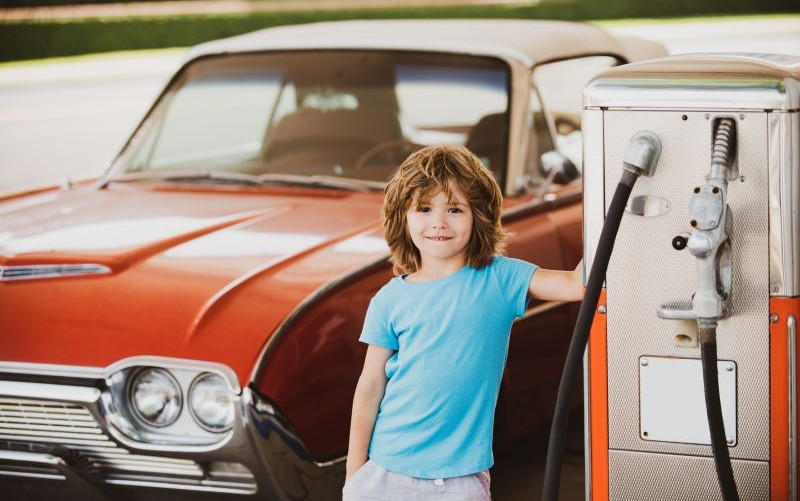
Remember when petrol cost under a dollar a litre, a pub lunch was $10, and a soft serve from McDonald’s was 30 cents?
These ‘price memories’ shape what we think we should be charged today. So much so that every tap of the card or phone can feel like a bit of a rip-off. And we can’t help but compare it to what things cost just a few years – or even decades – ago.
The problem is, those “back in my day” prices are now as outdated as the wallet you used to carry cash in.
Here’s what we need to remember about inflation and the fallacy of mental price tags.
Inflation nation
Think of inflation like running a bath:
- Water level = how much things cost (groceries, rent, bills).
- Inflation = how fast the water is rising.
When the Reserve Bank of Australia talks about inflation, they mean the speed at which prices are rising… not the prices themselves. It’s the trend, the momentum, and the direction it’s headed.
If rising inflation isn’t controlled, the tub fills up way too fast and can even overflow. That’s when the economy is really in strife because, like a flooded bathroom, it’s not so easy to clean up.
Now, when inflation is described as “under control” or “has cooled,” it doesn’t mean things are getting any cheaper. In fact, prices are still rising, just at a slower pace.
But that can still feel frustrating. Even when inflation is stable, it rarely brings prices down. Add rising interest rates, which is the RBA’s main tool to turn those bath taps and slow the flow of water, and everyday expenses seem to cost the earth.
$2 eggs and bread
Every time we pay, we can’t help but do a quick mental comparison.
“How can the weekly shop be this much?” we think. “I still remember when a dozen eggs cost $2 and a loaf of bread was about the same!”
We all suffer from price nostalgia to some degree … but those of us who are older, even more so. I still remember when a postage stamp was 5 cents …! The point is, we’re living in two economies at once: the one in our head and the real one.
Money mind games
Another funny thing that happens with price memories is that our brains take a while to play catch-up … there’s a lag. By the time we accept today’s prices as ‘normal,’ they often go up again and we’re back to feeling shocked.
But it’s not just our perception, of course. The cost-of-living crunch is real, and indeed everything is more expensive nowadays.
But that’s not the fault of everyday Aussies.
Beyond spending
It doesn’t help that while households are doing what they can to curb inflation – cutting back, budgeting, absorbing higher interest rates and rent – much of what’s driving prices is out of our control.
Here’s the truth: the cost of fruit and veg isn’t rising because Australians are suddenly eating better. It’s rising because of poor weather, disrupted growing conditions, and higher transport costs.
And petrol prices didn’t spike because we’re all driving more. They’re tied to global oil markets and, right now, ongoing uncertainty in the Middle East is keeping those prices elevated (for who knows how long).
Wages are often blamed too, but much of the recent growth has been in the Government sector. That adds to inflationary pressure, which in turn puts the RBA in a position where it may need to raise interest rates again.
And when that happens, households feel it immediately. A 0.25 per cent increase can add roughly $100 a month to a $600,000 mortgage. So while we’re told to spend less, the reality is we’re already doing the heavy lifting.
Much of the inflation we’re experiencing isn’t being driven by everyday Australians, but we’re the ones wearing the higher costs. And when we remember the same things costing much less, it’s hard to accept them.
The good news
Understanding how inflation works, and how our price memories can distort reality, can help us budget better and manage expectations when we’re tapping to pay.
Except at the petrol station, that is. I don’t think any of us can quite believe the cost of fuel right now.
So while we remember the prices from yesteryear, and while inflation may rise and fall, one thing feels certain: petrol is never going to be a dollar a litre again.