



















Unpredictable economic times have us all biting our fingernails. Here’s why the RBA is playing it safe.
It was no surprise recently that the Reserve Bank kept official interest rates on hold at 4.1 per cent even though inflation is now back down in the preferred 2-3 per cent target range. As I mentioned in last week’s newsletter, financial markets were only factoring in a 7-9 per cent chance of another cut.
Even though the latest domestic economic data has tended to be weak and the uncertainty of the Trump tariff wars are worrying the markets, the RBA’s economic outlook is pretty unchanged. The March quarter CPI due on 30 April will be important in their decision making at the next board meeting on 20 May.
What the RBA says
The statement attached to Tuesday’s decision confirmed that the current stance of monetary policy ‘remains restrictive’ and made reference to the decline in employment in February. That was hosed down by the following statement which noted, “Measures of labour underutilisation are at relatively low rates and business surveys and liaison suggest that availability of labour is still a constraint for a range of employers”.
The statement also said that, “Wage pressures have eased a little more than expected”. But that observation was offset by the line, “Productivity growth has not picked up and growth in unit labour costs remains high”.
On the global economy, the statement noted that, “Recent announcements from the United States on tariffs are having an impact on confidence globally and this would likely be amplified if the scope of tariffs widens, or other countries take retaliatory measures. Geopolitical uncertainties are also pronounced. These developments are expected to have an adverse effect on global activity, particularly if households and firms delay expenditures pending greater clarity on the outlook”.
Treading with caution
At Michele Bullock’s press conference after the rate decision, she admitted the Board did not even consider a rate cut.
CommSec continues to look for an end year cash rate of 3.35 per cent (i.e. three further 0.25 per cent rate cuts over 2025. And they have the interest rate cuts pencilled in for May, August and November).
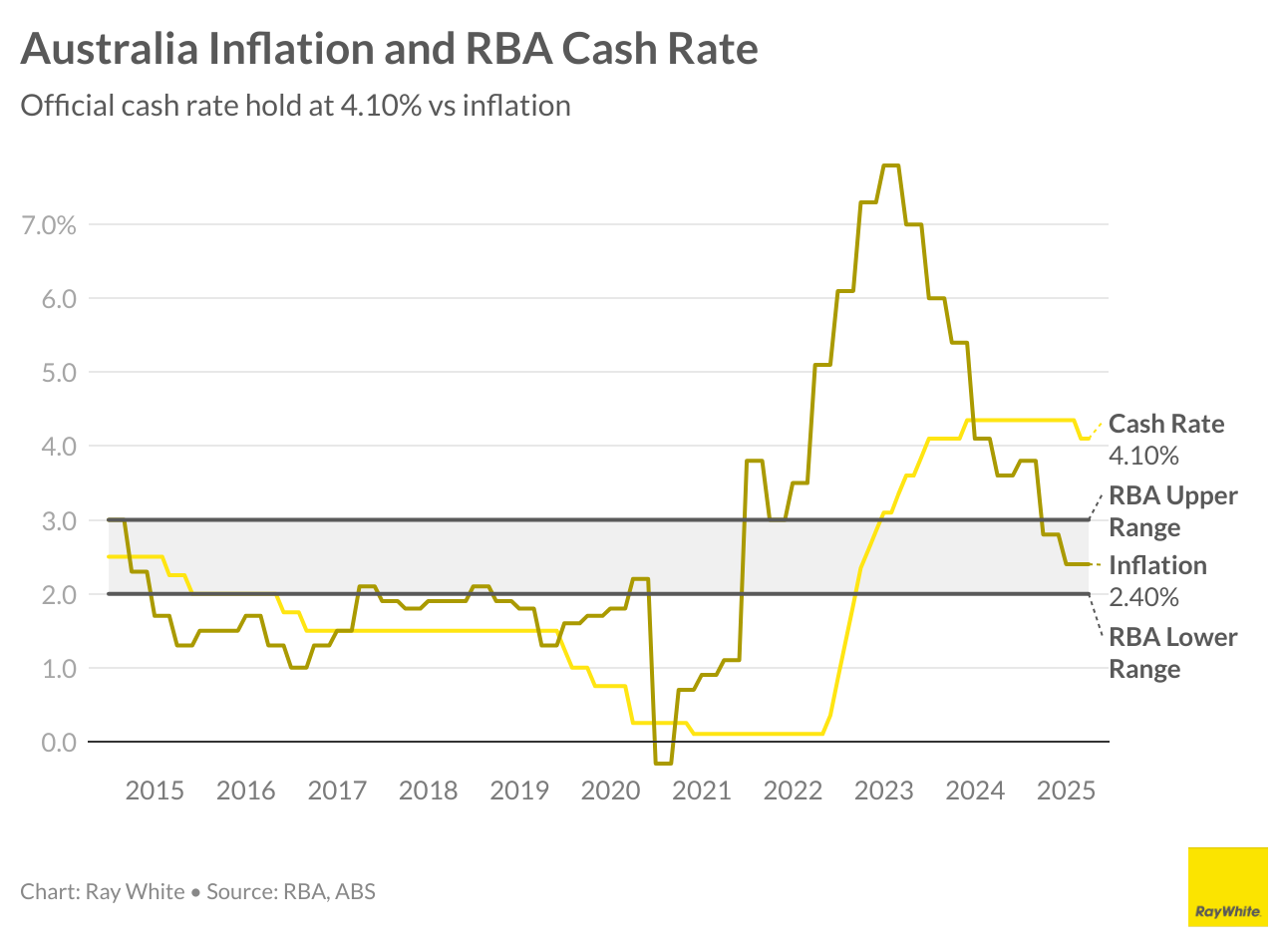
Obviously, the RBA is being incredibly cautious given what’s happening around the world. They wouldn’t want to cut rates again too soon and have to lift them again if inflation starts to accelerate from the tariff wars.
Rate cuts have a big psychological impact on consumers. After February’s rate cut, for example, consumer sentiment bounced to a three-year high in March.
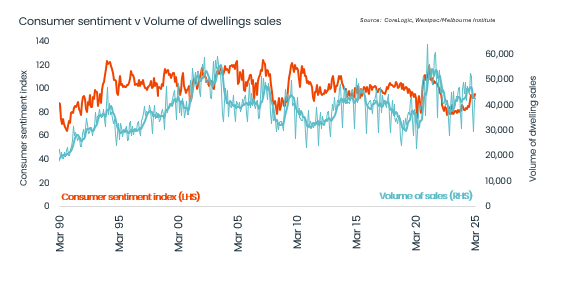
When consumers feel more confident about the domestic economy and their household finances, they are more prepared to make high-commitment decisions such as buying or selling a home. The correlation between sentiment and home sales is clear from the graph below; the flow-on effect from the uptick in sentiment should translate into increased selling activity.