





















Australian consumers spent an astonishing $19.2 billion online in the three months prior to the EOFY, according to data from Australia Post.
While the surge signals renewed consumer confidence – thanks to easing inflation and the anticipation of future rate relief at the time – it also reveals something else:
We’re a nation of bargain hunters. And we’re getting seriously good at it.
The rise of savvy online shoppers
The Australia Post eCommerce report shows 7.9 million Australians shopped online during the measured quarter – that’s a 15 per cent increase year-on-year.
As the below graph shows, millennials led the charge, spending $6.9 billion online, followed by Gen X at $5.3 billion and Gen Z with $3.4 billion.
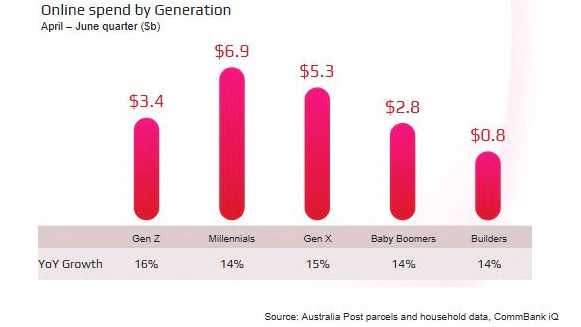
The data captures a period that included the Reserve Bank of Australia’s (RBA) decision to hold rates in April, the 0.25 per cent cut in May, and the high hopes of further relief in July (despite the hold, markets had largely predicted a cut). And let’s not forget the EOFY sales …
The internet was buzzing with Aussies out to nab a deal.
But here’s the interesting part: while overall online spend is up, the average online basket size actually fell by 1.6%.
That tells us something … deal-chasing and consumer saving isn’t just a temporary trend. It’s a way of life now for Australians navigating a persistent cost-of-living crunch.
Here’s how the most savvy among us are doing it – and doing it well.
8 things online bargain hunters know
How to find deals
Hardcore online bargain hunters don’t just wait for sales, they actively seek them out.
They join websites like OzBargain – a community-driven site for deals, and use GetPrice and Cuponation – which lists retailer’s discount codes and sales promos to save.
They join websites like OzBargain – a community-driven site for deals, and use GetPrice and Couponic Australia – which lists retailer’s discount codes and sales promos to save.
The best comparison engines
Gone are the days of hopping from store to store to compare product prices. Today’s online shoppers use sites like PriceMe, GetPrice and Price Hipster,, which track price drops and send alerts. Even a quick Google search can show if there’s a better deal elsewhere.
They are also using platforms like Compare the Market and iSelect to compare prices across insurance, utilities, and other household services.
And, they know which online retailers offer price matching. If they don’t, they ask just in case.
When the sales are on
Bargain hunters plan ahead and wait for the big online sales to pounce on before purchasing.
They have just saved a tonne at the EOFY sales in June. This year’s Black Friday (28 November) and Cyber Monday (1 December) are firmly locked into their calendars, and of course, Boxing Day deals will be another shopping opportunity in the new year..
They resist making big purchases outside of sales season.
How to save on shipping
Bargain hunters know that shipping can eat into their saving, so they:
- Use flat-rate or free shipping offers.
- Choose local retailers for cheaper delivery or click-and-collect.
- Consolidate purchases into one order.
- Join loyalty or membership programs that include free shipping.
Keep a separate email address
Not all marketing emails are spam. Savvy shoppers know that signing up for retailer newsletters means they’lll be first to know about sales and promotions.
So they don’t get bombarded, though, many have a separate email address they apply to sign ups and memberships so they never miss a deal, but keep their primary inbox tidy.
They also follow retailers on social media to learn about flash sales and promos.
The best second-hand marketplaces
Buying second-hand can mean major savings – and it’s better for the planet.
Savvy shoppers trawl buy-swap-sell Facebook groups and marketplaces like eBay and Gumtree for refurbished tech and pre-loved goods.
To be strategic with their cart
Smart shoppers also know that if they leave items in their online cart and wait a day or two, retailers will sometimes try to entice them to “come back” – with an offer or a discount code.
That said, they also know when to walk away. A real bargain isn’t just a low price – it’s value for money. Just because it’s on sale, doesn’t mean it’s worth your hard-earned money, the shipping cost or your time in researching a better deal.
It’s all about mindset
The best bargain hunters approach every purchase with a value-first mindset.
They question prices, resist brand loyalty, compare relentlessly, and never assume the first offer is the best offer. They weigh up things like free shipping vs base price – and their growing savings prove their thinking is on the money.
Happy bargain hunting, everyone!