



















It is with a sense of guilt and embarrassment that I admit Libby and I live in a house where we have spare bedrooms – and we’re part of the much-pilloried Baby Boomer generation. The shame we feel …
Economic and finance gnomes lay blame for the housing crisis purely at our feet because we should be downsizing in the name of efficiency to something where there are no spare bedrooms. We are part of the more than 60 per cent of Australian households made up of just one or two people.
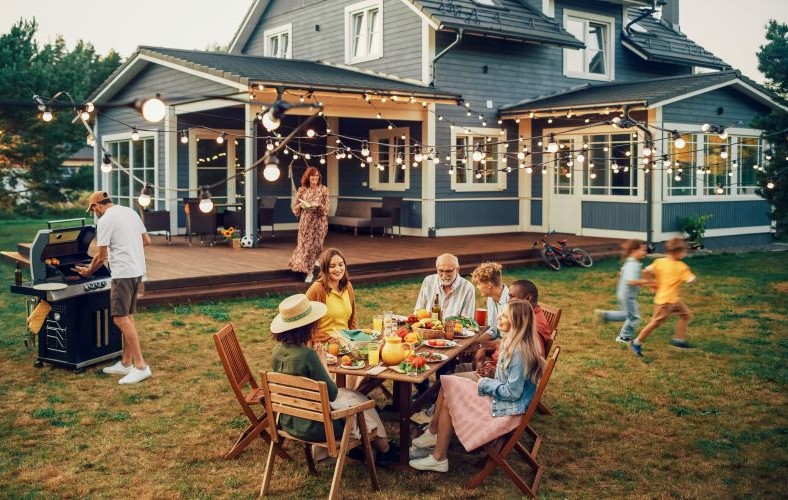
It’s a valid economic argument, but the human rationale is that we have four married children and nine (soon to be 10) grandchildren who, weirdly, love hanging out with each other at our place. Our son and his family lived with us from October to June then our daughter and her family moved in prior to them moving overseas. This weekend we have 13 people sleeping at home as our West Australian mob comes to visit.
And we love it.
Not great for the housing crisis
Look, I get the economic rationale of why we should be downsizing but, selfishly, a higher priority for me is a base for our kids and grandkids to hang out and have fun with each other.
Property research group, Cotality, has analysed the make-up of the current Australian housing stock and poses the question of whether we’re building the right mix of properties.
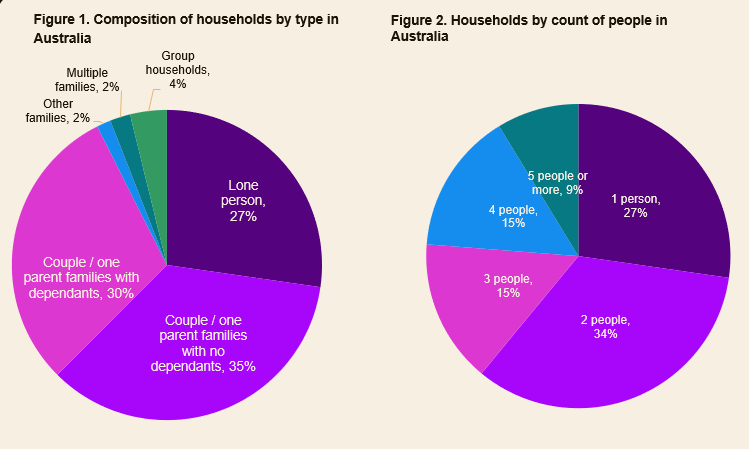
Couples without children and people living alone make up the majority of households, while only around 30 per cent of Australian households are families with dependants. A notable 31 per cent are couple families without dependants, and 27 per cent are people living alone. Of the lone-person households in Australia, the Bureau of Statistics data suggests around 40 per cent are aged 65 and over.
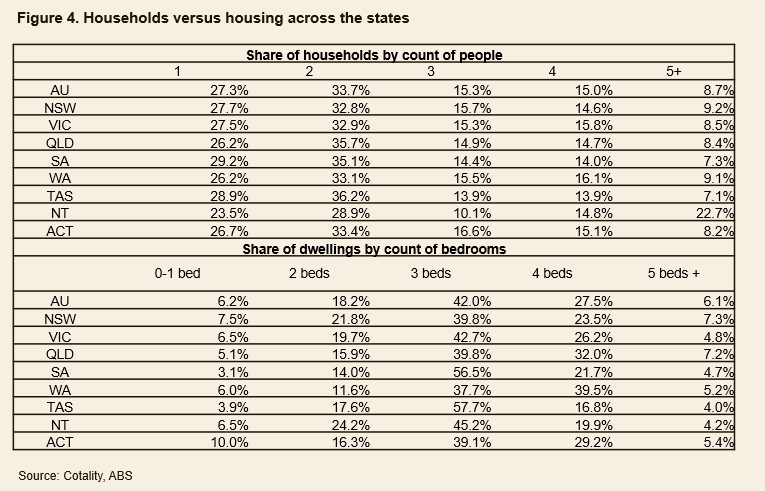
When comparing the number of people in each household with Cotality data on housing by number of bedrooms, there is a clear mismatch.
The most common household type in Australia is two-person households, yet the most common housing type is three-bedroom homes. One-person households are the next largest group, accounting for 27 per cent of all households, but one-bedroom and studio dwellings make just 6 per cent of Australia’s housing stock.
Big houses are in demand
Apart from my situation with a big close family wanting to hang out, the rise of the home office, the desire for in-home care later in life, and space for hobbies and visitors, means those extra bedrooms are being put to good use.
New houses have also generally become larger over time, with one explanation being that more amenity is needed within the home to account for the growing distance from large commercial centres. As we build further and further out on city fringes, homeowners may find it more convenient to have home amenities like a gym, workspace or home theatre.
The Cotality report notes that of the new housing pipeline overall, the share of home units is shifting gradually higher. In the past decade to June 2025, ABS data shows dwellings other than houses made up about 40 per cent of approvals – up from 37 per cent in the decade prior.
Cotality data shows there has been strong demand for larger dwellings, with the five-year annualised growth rate highest for four-bedroom homes nationally (8.7 per cent), compared to just 3.7 per cent for studio and one-bedroom dwellings. This stronger capital growth may help explain the preference for buying and holding houses over units – and larger houses over smaller ones.
Further to this is rental demand for larger homes. As the rental crisis continues, tenants are shifting towards larger properties with more bedrooms, so the cost can be shared across more people.
According to CoreLogic’s bedroom count metric, larger rental properties are showing more resilient rental growth, despite being more expensive to buy. Large rental properties may actually be more feasible for renters in share situations, including households where different generations have moved back in together to share costs.
The higher the bedroom count in a property, the lower the average rent per bedroom (ie. total rent divided by number of bedrooms).
But of course, not all of us are renting out our large homes. Rather, we are living in them with plenty of spare rooms.
A downsizing nudge
So as for encouraging baby boomers like myself to downsize, the Cotality report suggests that governments could offer financial incentives, thus making it more costly to hold excess housing and more affordable to move into smaller homes.
This has led many to advocate for tax reforms such as abolishing stamp duty, which currently discourages property transactions, and replacing it with a broad-based land tax that increases costs relative to the amount of land owned.
These options are both politically difficult as it would involve moving from a tax that applies to a small number of voters each year – those who purchase property – to one that will tax two thirds of voters who own property.
This would, however, potentially introduce an incentive for older Australians who own their home outright to downsize. Reforming pension asset tests to include the value of the family home would also help the numbers stack.