





















The nation is feeling gloomy. But now even drowning our sorrows is getting more expensive, with Australia recording the biggest beer price increases in the developed world.
Perhaps it’s no surprise we’re not feeling particularly cheery, considering new data points to a pessimistic outlook.
Cost of living angst
According to SEC Newgate’s July Mood of the Nation research, a record 68 per cent of Australians believe the country is heading in the wrong direction. Six in 10 say they’ve felt more negative than positive lately, while 44 per cent say they are struggling to make ends meet — the highest level recorded in two years.
One finding, though, really stood out. Almost half of Australians believe their standard of living is worse than their parents’ was at the same stage of life. That sense of decline is particularly strong among younger Australians and renters.
There is also growing concern about the nation’s finances, with more Australians expecting the federal budget will leave them worse off rather than better off.
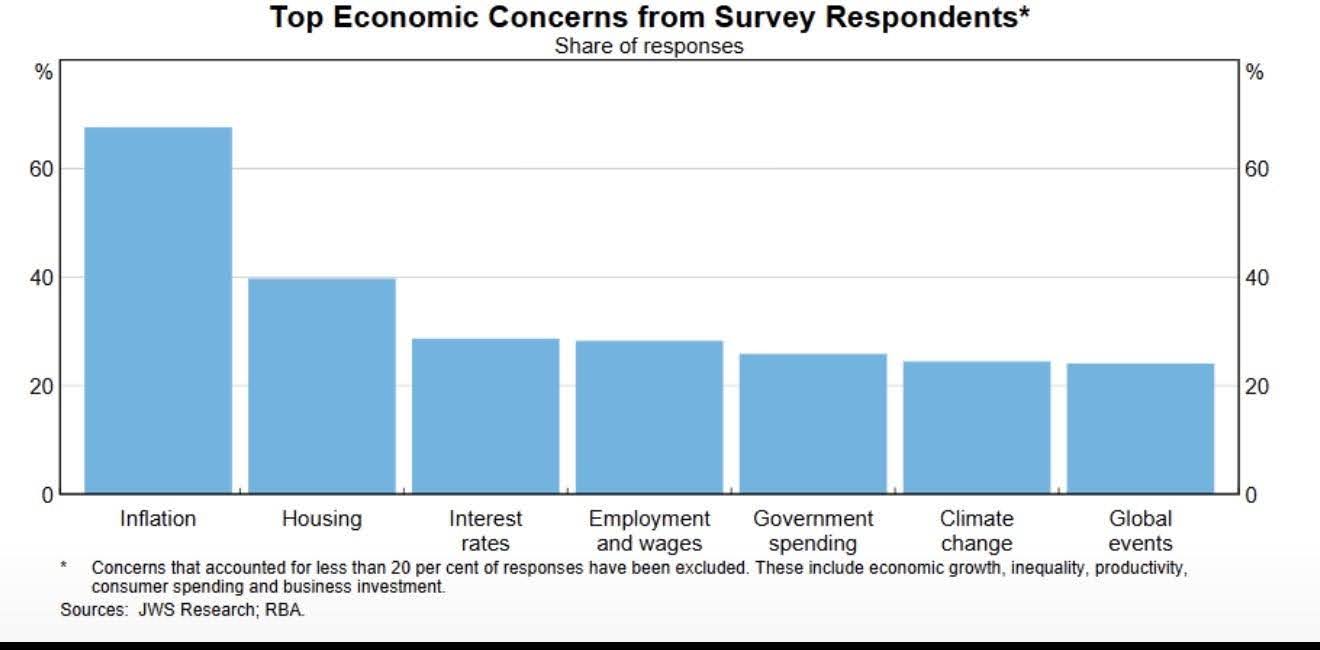
The chart below, using data from JWS Research and the Reserve Bank, puts numbers on that growing sense of economic gloom.
Asked about their biggest economic concerns, nearly 70 per cent of Australians nominated inflation, making it by far the nation’s top worry. Housing followed at around 40 per cent, while interest rates, jobs and wages, and government spending all ranked in the 20s. The cost of living isn’t just one concern among many – it’s the main event.
To add to the gloom, it doesn’t help that our pay packets have gone backwards too.
Wages fall, prices don’t
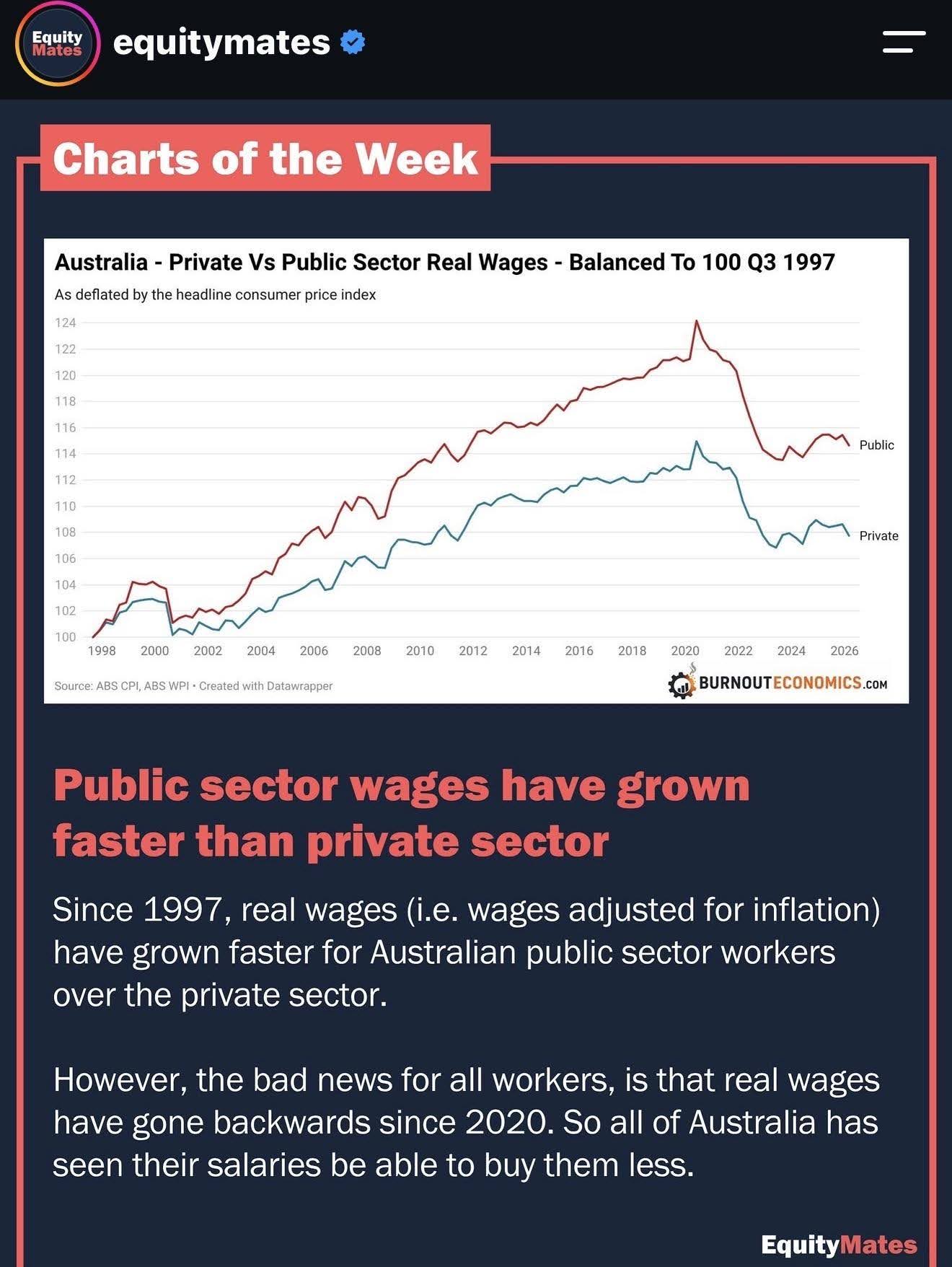
This next chart, shared by the Equity Mates team, tracks real wages – that’s wages adjusted for inflation – since 1997.
Public sector wages have outpaced those in the private sector over the past three decades. But the bigger story is on the right-hand side of the chart. Since 2020, real wages have fallen for everyone and remain well below their peak.
If your salary feels like it buys less than it did five years ago, you’re not imagining it.
Then, THIS …
So we reach for a beer … only to find we’re paying the biggest beer price increases in the developed world.
IFM Investors compared beer prices across countries back to 2000, and Australia takes home the gold medal nobody wanted. Our beer CPI has climbed to 257.6 (from a base of 100 in 2000) – meaning prices are now more than two-and-a-half times higher. By comparison, the index sits at 182 in the US, 167 in Germany and 130 in the UK. Remarkably, Japan’s sits at just 97, where beer is actually CHEAPER than it was 25 years ago.
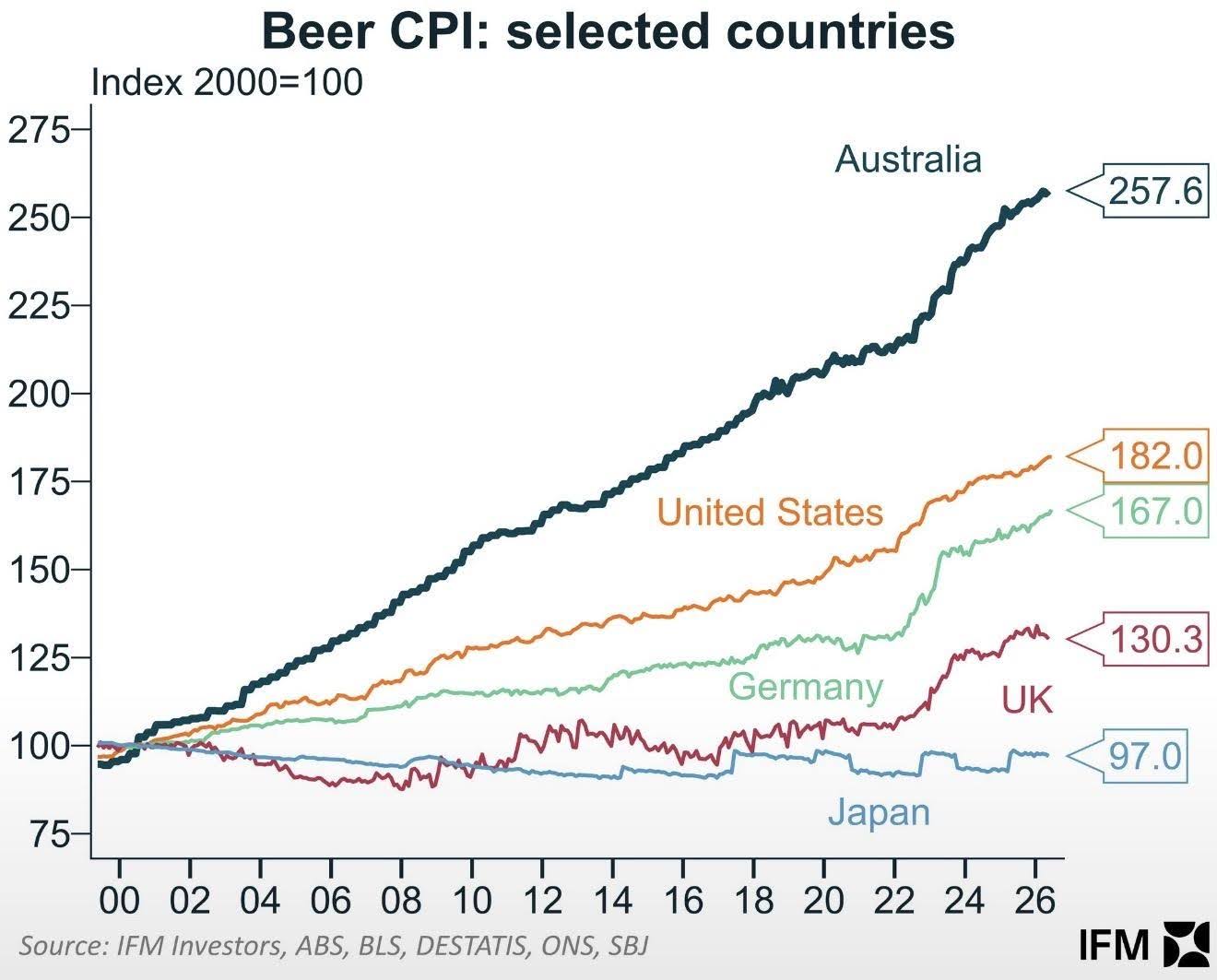
A big part of the story is Australia’s twice-yearly beer excise indexation, which pushes up the tax on a pint every February and August – regardless of what’s happening to wages.
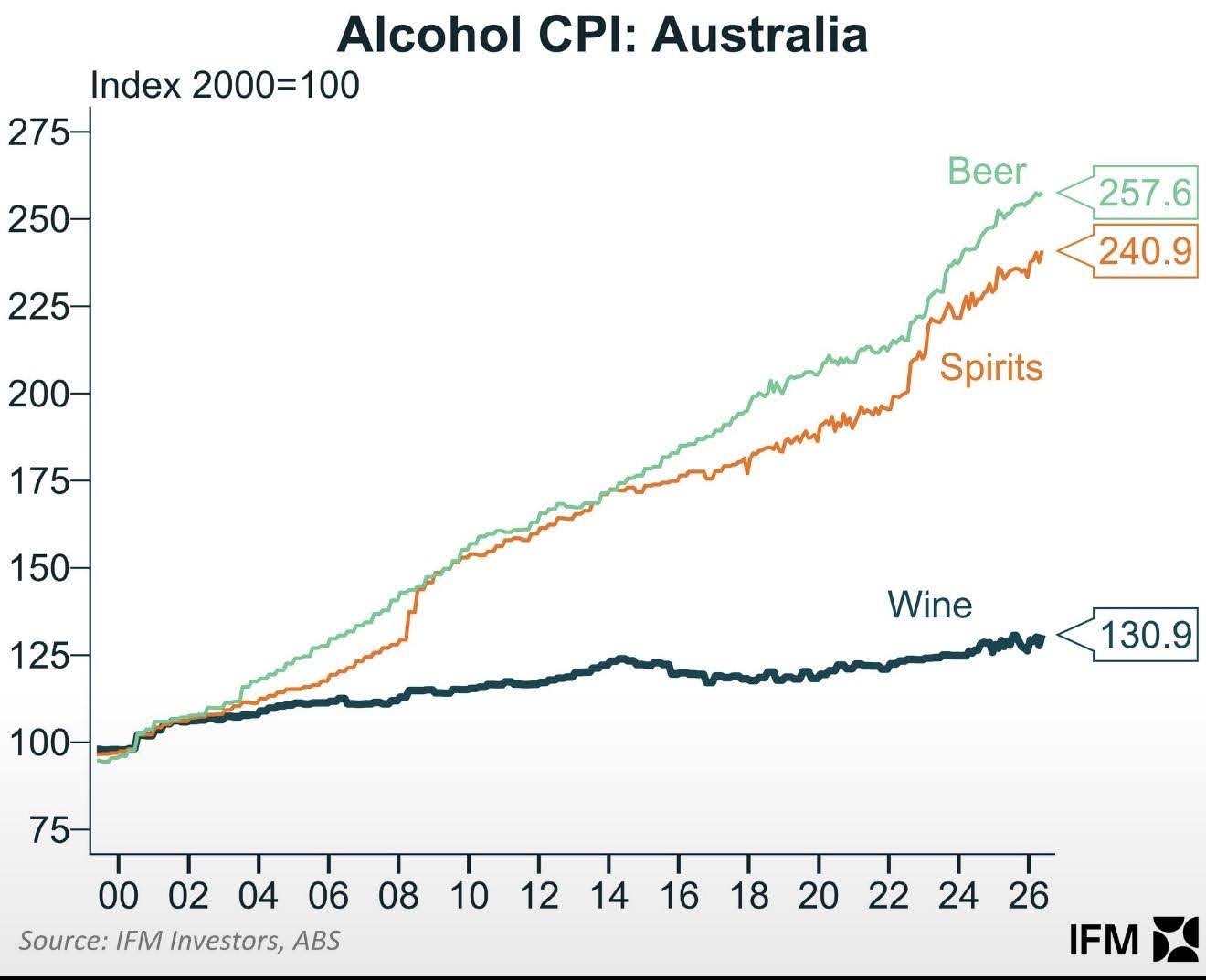
The below companion chart splits Australian alcohol prices by type.
Beer is up the most since 2000 (index 257.6), spirits close behind (240.9) … but wine has risen barely 31 per cent in 26 years (130.9).
Fun (or not so fun) fact
Why? Tax design.
Beer and spirits are taxed by alcohol volume with that automatic twice-yearly indexation, while wine is taxed as a percentage of its wholesale value … which, with a grape glut and cheap cask wine holding values down, has kept the tax take low.
There’s your conversation starter for the weekend barbecue: the reason your shiraz has been kinder to your wallet than your mate’s lager is a tax formula.