





















How we feel as consumers shapes the economy. And right now, Australians are feeling gloomy – a lack of consumer confidence helps explain everything from falling home prices to why retailers are struggling.
The team at IFM Investors have pulled together the Westpac-Melbourne Institute consumer survey into one brilliant dashboard, and it’s sobering viewing.
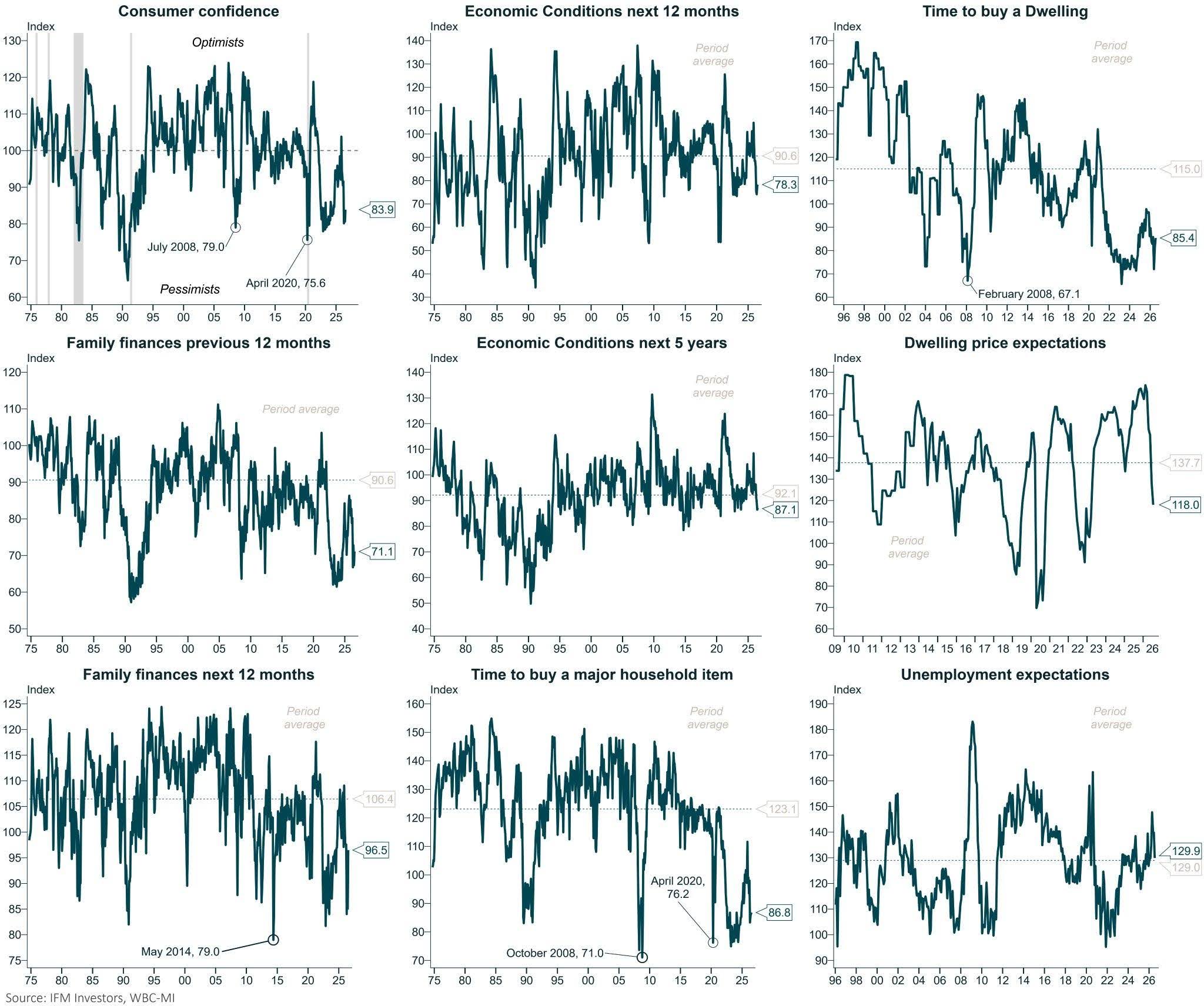
Headline consumer sentiment sits at 83.9. Any reading below 100 means pessimists outnumber optimists, and we’ve been stuck below that line for the best part of four years.
For perspective, the GFC low was 79 and the Covid panic bottomed at 75.6. We’re not that far above either.
Dig into the details and it gets more interesting …
A worried nation
The “family finances versus a year ago” index is at just 71.1 against a long-run average of 90.6 – that’s the cost-of-living squeeze in one number. “Time to buy a major household item” is at 86.8 versus an average of 123.1 – the only times it’s been meaningfully lower were October 2008 (71.0) and April 2020 (76.2). And “time to buy a dwelling” languishes at 85.4 against an average of 115.
The one going up? Unemployment expectations, at 129.9 and now above its long-run average – meaning more households expect the jobless rate to rise. When people worry about their job, they don’t spend, and they certainly don’t stretch for a bigger mortgage.
Source: IFM Investors
The silver lining is that these are exactly the conditions that eventually force policymakers’ (and Reserve Bank’s) hands. And for patient buyers with secure jobs, gloomy sentiment has historically been a friend, not an enemy.
Home prices go backwards … and owners finally believe it
Now to another IFM Investors chart, and it’s the one I’d pin to the fridge if you’re thinking of buying or selling property this year.
It overlays households’ house price expectations (from the same Westpac-Melbourne Institute survey) against actual capital-city dwelling prices from property research group Cotality.
The punchline: Prices across the eight capitals are now falling at a 5.1 per cent annualised pace on a three-month basis .. and price expectations, which were riding high above their long-run average as recently as a few months ago, have rolled over and cracked below it.
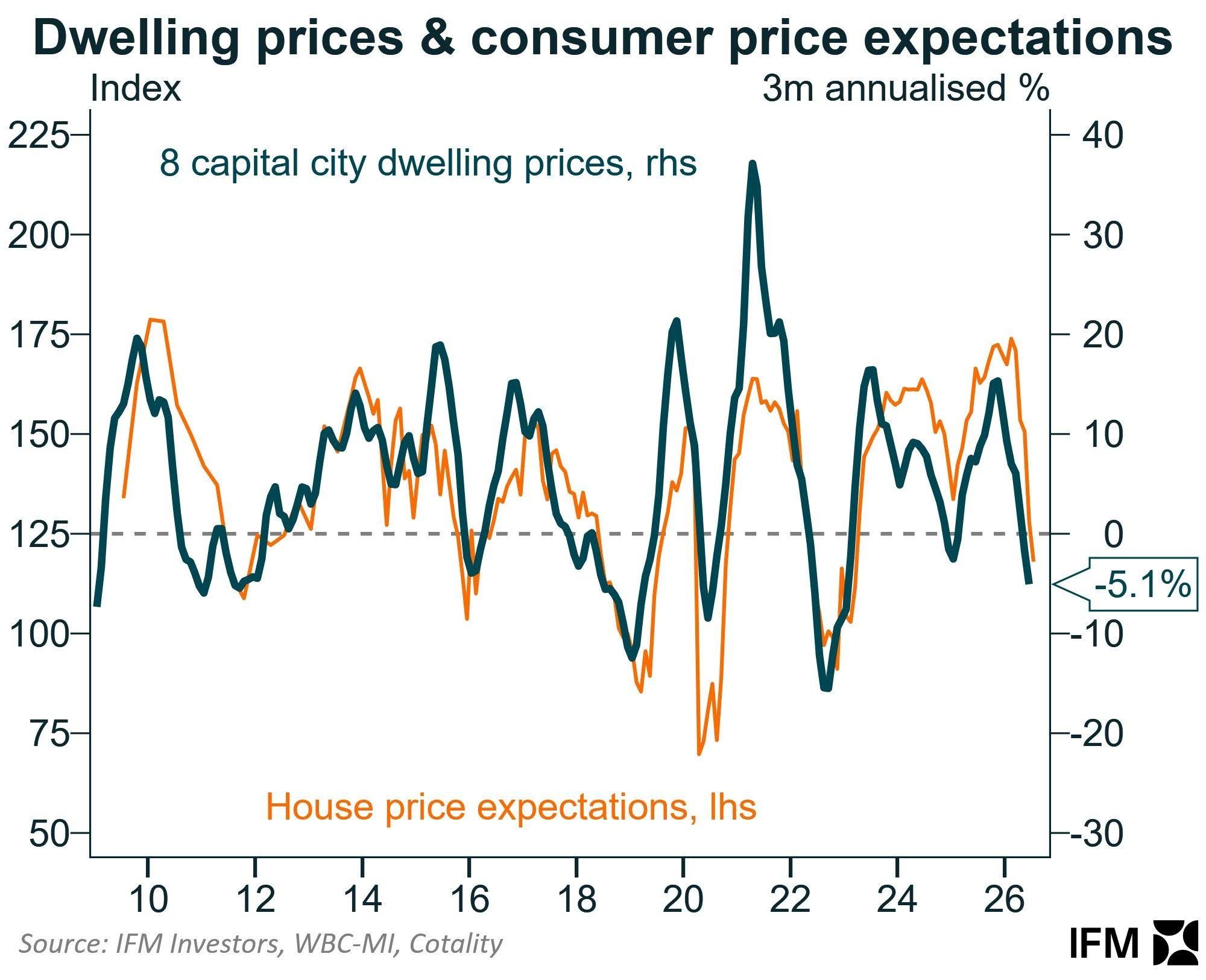
Why does that matter? Because housing markets run on psychology as much as interest rates. When owners believe prices only go up, they hold out for their number and buyers panic-bid. When expectations crack, as this chart shows they now have, sellers meet the market and buyers take their time.
Expectations tend to chase actual prices, so a fall in both together tells you this correction has momentum.
If you’re a buyer, this is the environment where good negotiating gets rewarded. If you’re a seller, price realistically from day one. Chasing the market down is the most expensive mistake in real estate.