



















Real estate giant, Ray White, has identified the suburbs/towns which are most at risk from climate change. Do you own a property in one of these high-risk suburbs?
Beaches face rising seas, rivers may flood more often, and bush areas are at risk of wildfires. Despite these growing threats, house prices in many of these areas keep climbing.
Rising water
The Ray White report looks at whether home buyers are considering climate risks, particularly flood risk, when buying in these locations, or if the dream of an ideal lifestyle is making the potential danger and rise in insurance costs worth the cost.
Climate Valuation is a company that provides climate risk analysis to individual property owners. In June 2024, they produced a report looking at suburbs and towns with a high risk of flooding. Across Australia, 4 per cent of all properties are considered to be high risk, i.e., they carry a high risk of being uninsurable or prohibitively expensive to insure for flooding.
Overall, the report found that Queensland had the highest proportion of homes at high risk (5.1 per cent of all homes) with the ACT having the lowest (1.6 per cent).
‘Black Zone’ properties
Ray White looked at whether the risk of being uninsurable for flooding has an impact on home values. In particular, whether the areas most at risk under or over perform relative to the wider market. By doing so, it provides some measure as to whether people are pricing in flood risk, or they are buying in these areas despite the risks.
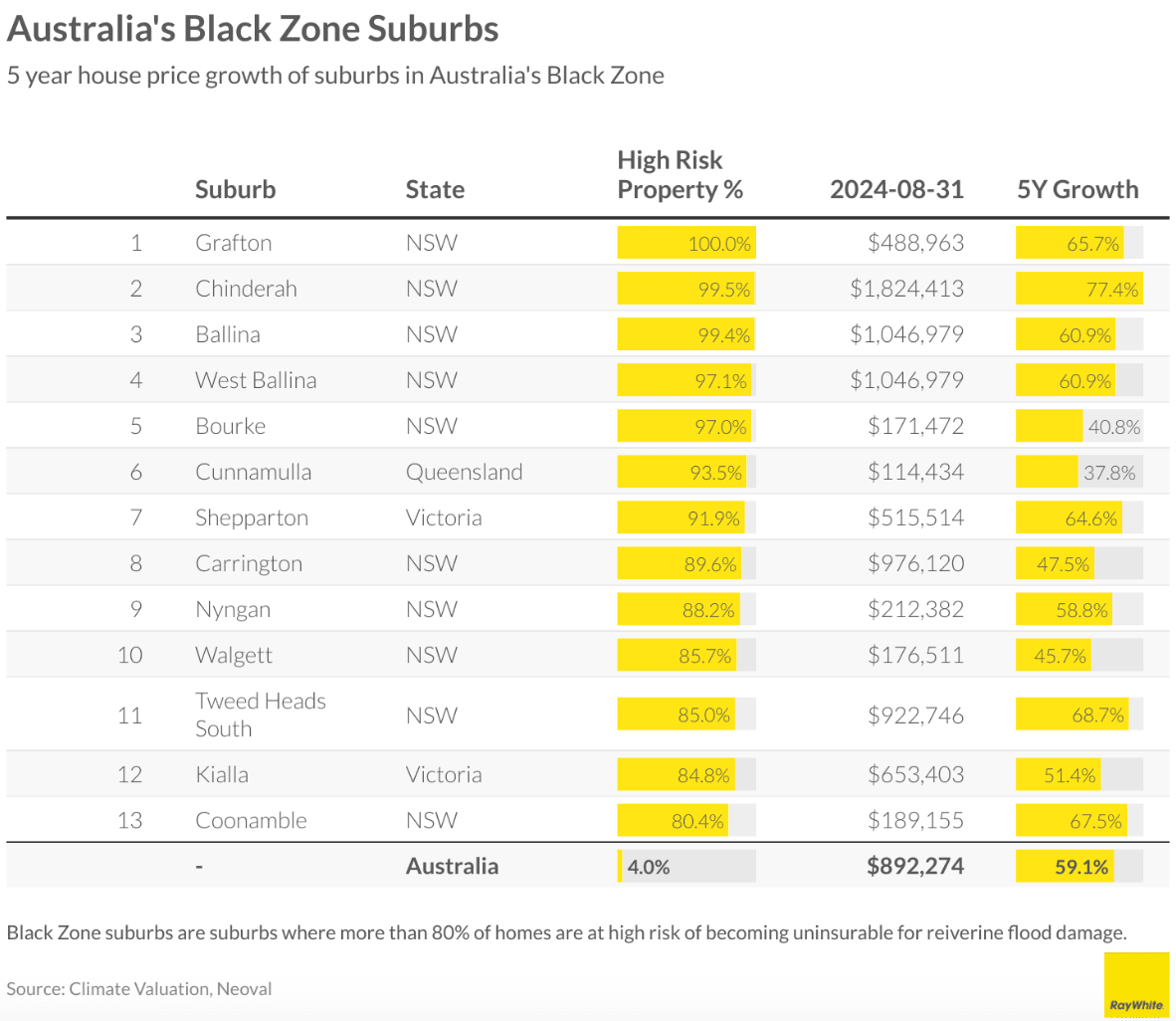
Overall, it appears that the risk of becoming uninsurable for flooding has a limited impact on demand for property. In total, 13 suburbs are considered to be Black Zone suburbs with more than 80 per cent of properties in these areas at high risk.
Of the 13 suburbs, all of them experienced price growth over the past five years, with more than half of them (seven) seeing price growth stronger than the Australian average. Grafton, Chinderah and Ballina, all have more than 99 per cent of properties considered to be high risk but all of these suburbs’ house price growth outperformed the Australian average over the past five years.
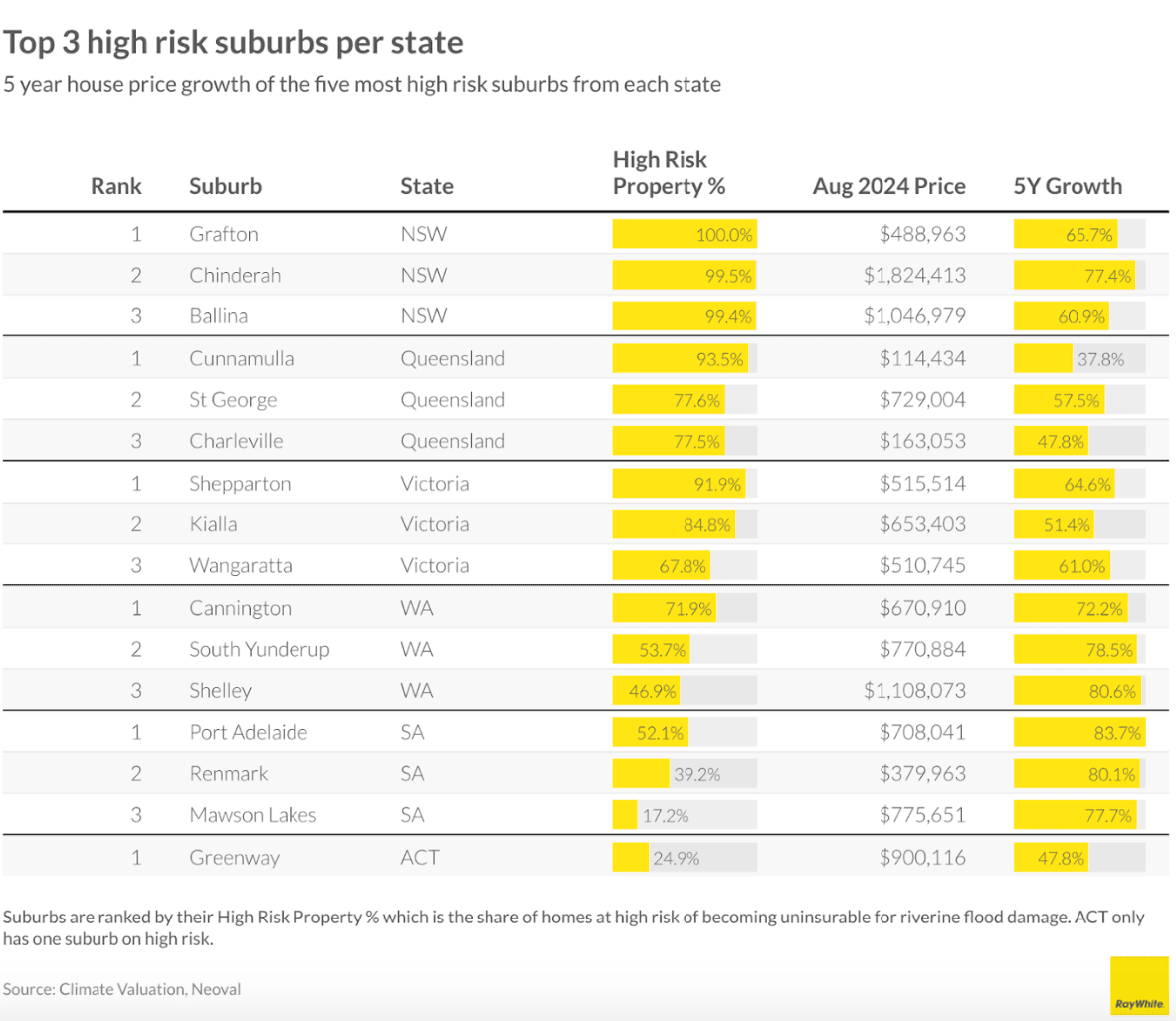
Overall, it appears that climate risk has a limited impact on demand for homes in high-risk suburbs. While we only looked at one risk factor (flooding), it is likely we would see a similar trend for other climate linked events such as bushfires. The drive to live near water and close to the bush seems to outweigh the elevated cost of insuring homes in these areas, and the potential danger that wild weather events can create.