




















The Reserve Bank is under pressure to lift interest rate.
The much-anticipated December quarter inflation rate was a shocker. And when the Reserve Bank Board meets on Tuesday 3 February, they will have to seriously consider raising official interest rates.
It’s not just the actual figures that would be concerning the RBA, it’s more the upward momentum behind those figures that would be scaring them.
Inflation nation
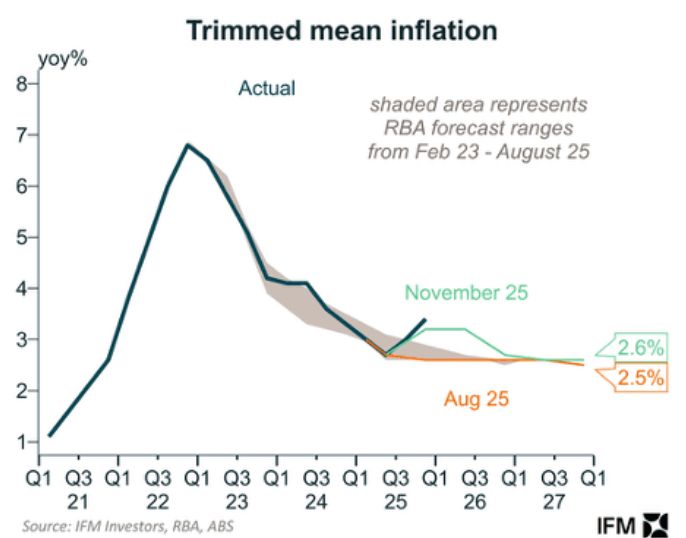
In the September quarter result, the trimmed mean CPI (which is the RBA’s preferred measure of inflation) was 3.2 per cent … higher than the RBA’s preferred 2-3 per cent target zone, but when it was released a lot of commentators said it was a one-off spike and the December quarter would likely drop back to within the RBA’s target band.
It didn’t. In fact, it gained momentum to 3.3 per cent. It didn’t slow at all. And that’s the worry.
The headline CPI figure also picked up speed to 3.8 per cent.
There needs to be a brake applied to this accelerating inflation – and that is always raising interest rates.
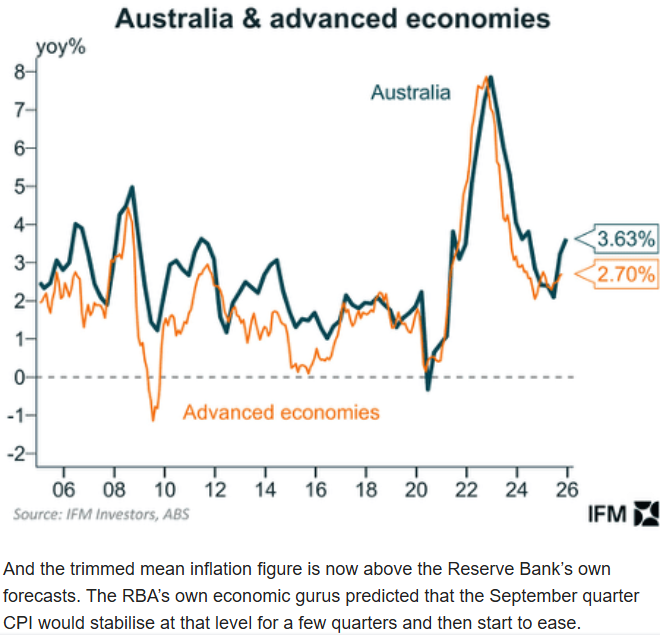
Naturally, politicians came up with a string of excuses; one of them saying that accelerating inflation was a global phenomenon because of tariff wars. Not so. Look at this chart, which shows inflation among advanced economies is below 3 per cent.
Australia has broken out from the pack.
And the trimmed mean inflation figure is now above the Reserve Bank’s own forecasts. The RBA’s own economic gurus predicted that the September quarter CPI would stabilise at that level for a few quarters and then start to ease.
That forecast was made in November. It’s wrong after just two months.
Hey, big spenders …
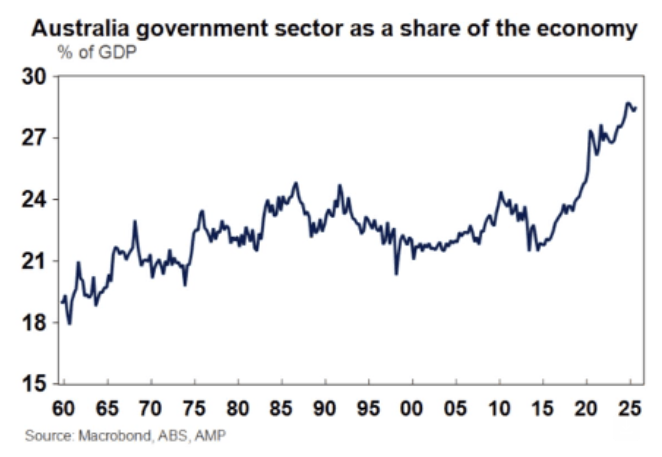
I also heard Treasurer Jim Chalmers say that government spending was not to blame for inflation, and that there was no mention of that as a factor from the Reserve Bank.
I beg to differ. Government spending (from all levels of government) is at near record highs and is largely creating the job shortage and the pressure on building costs … which all feeds into inflation.
Last year, RBA Governor Michele Bullock in very diplomatic governor-speak did say high levels of government spending were adding to inflationary pressures. The International Monetary Fund and the OECD have all warned Australian governments to cut spending because of the inflationary and debt consequences.
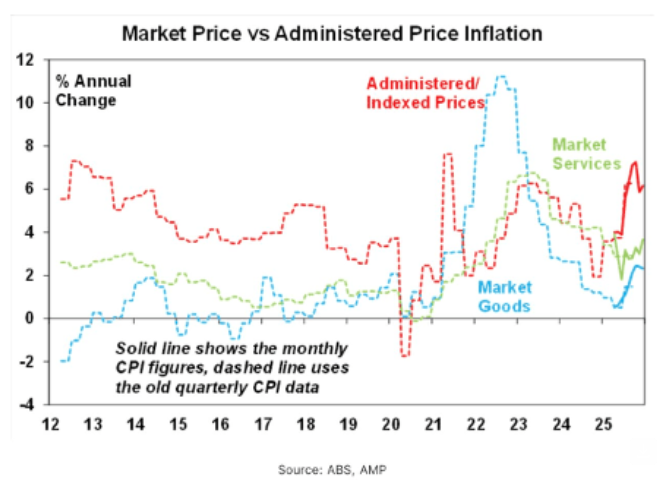
And while we’re talking about governments, one of the biggest drivers of inflation is what’s called “Administered Indexed Prices” rather than prices for traditional goods and services.
What are “administered indexed prices”?
They are government set prices which are often indexed to inflation. Things like council rates, electricity prices, tolls, etc. In other words, prices that governments control. So, they are spending at record levels and putting up their own prices to fund that spending spree.
But we end up paying for it through higher interest rates as well.