




















The Reserve Bank wants to cut interest rates – but it doesn’t know when, and it can’t guarantee that cuts will happen at all.
That’s the bottom line from Tuesday’s RBA decision to keep rates on hold, and the clear message from Michele Bullock’s press conference following the announcement.
Interest rate horoscope
The chart below is the most important one you’ll see this week when it comes to the outlook for interest rates. The RBA has updated its inflation forecast through to 2027 – the orange line shows the old forecast, while the green line represents the new one.
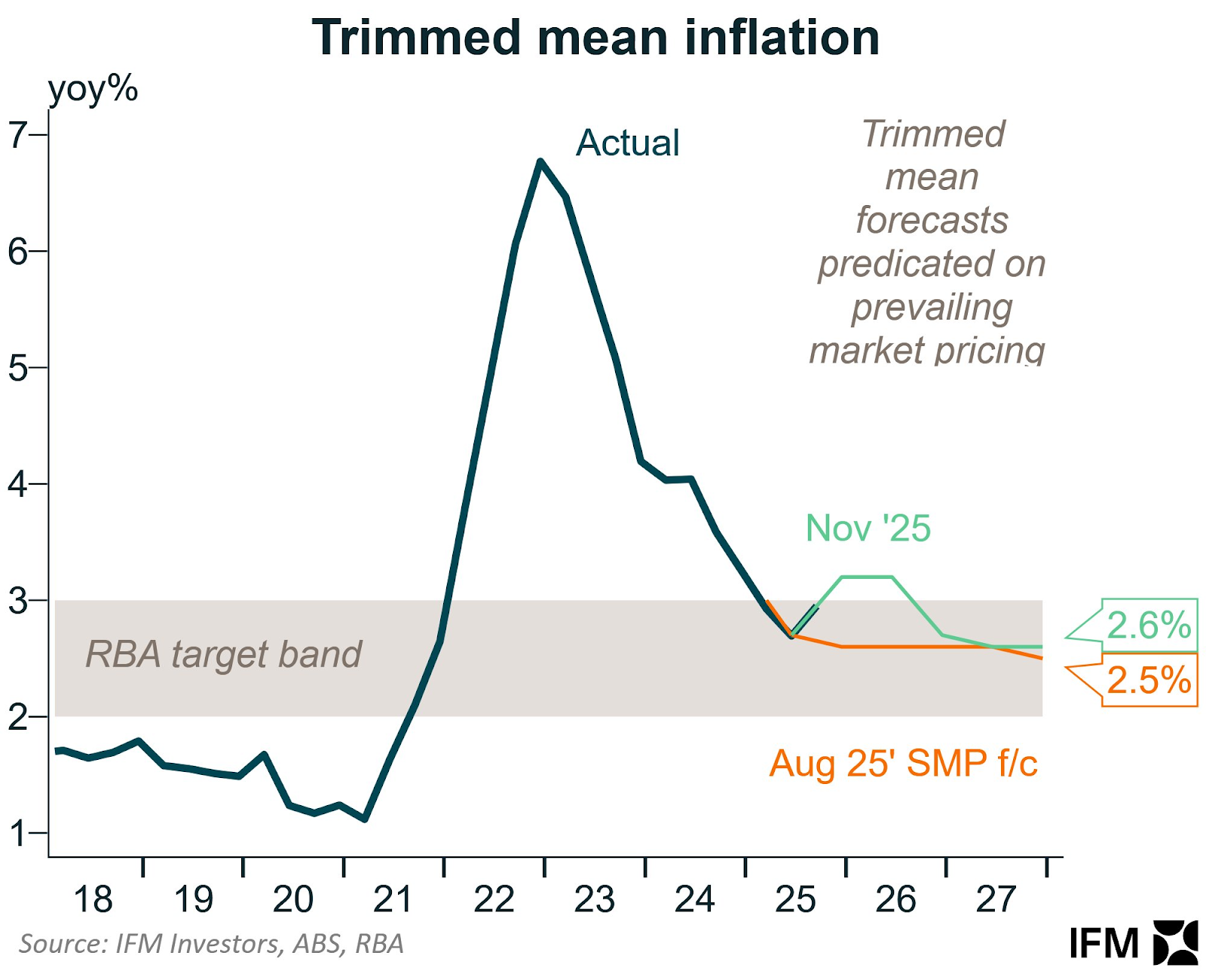
The September quarter trimmed mean CPI figure came in at the very top of the 2-3 per cent preferred annual target range. This new forecast (the green line) from the RBA shows how continuing to go higher above the 3 per cent maximum limit at least until the middle of next year and then coming down again.
Given this new forecast, it’s safe to assume no rate cuts for at least the next six months. That’s why the December and March quarter CPI figures will be critical in whether any further rate cuts eventuate.
Probably one small caveat is that from January, the monthly CPI figures will become more reliable because of a better measuring methodology. The RBA has tended to wait for quarterly figures before any change in rate settings but with more reliable monthlies they could possibly make quicker decisions.
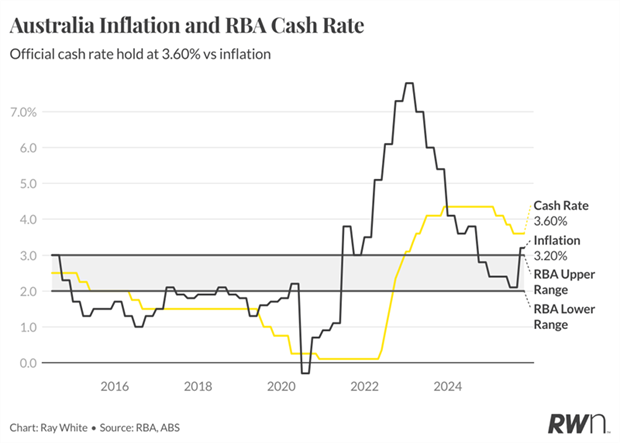
This is a summary of the inflation and cash rate figures as it now stands:
What about employment?
While the current trend in inflation won’t lead to a rate cut, I’ve made the point before that a significant deterioration in the labour market could force the RBA’s hand – accepting higher inflation for longer in order to cut rates and support employment.
The RBA has two pillars to its charter: Keep inflation low and keep Aussies in jobs.
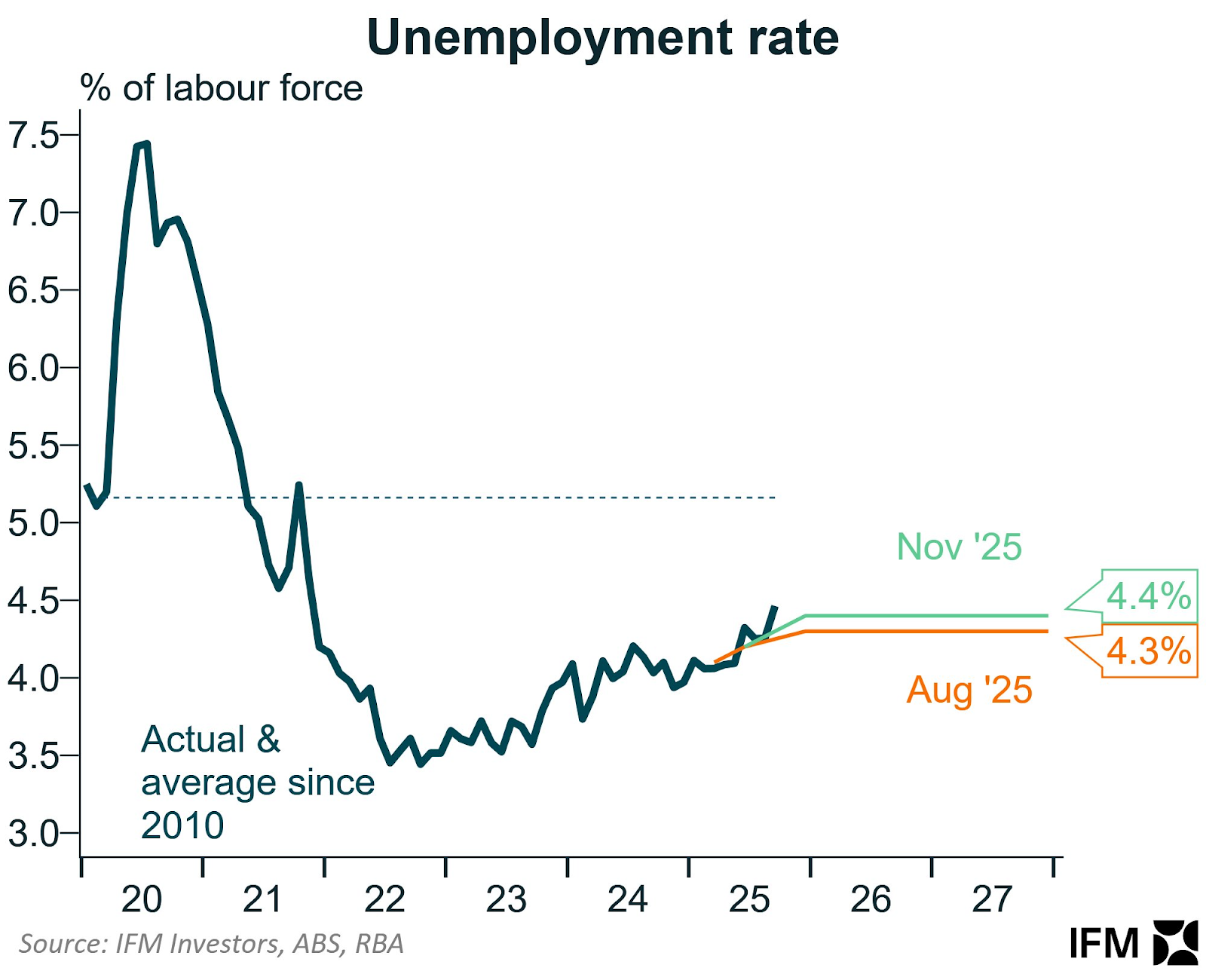
While the RBA changed its inflation forecasts, it has done the same for unemployment. The new forecast (see graph below) is the green line and the orange line is the old forecast.
Although the new one points to a slightly higher-than-expected inflation, it is not a major deterioration. Based on this, unemployment will not play a big role in their rate decisions if the forecast becomes reality.
What do tradies have to do with a rate cut?
During her press conference, Michele Bullock was asked what is causing inflation. She admitted the RBA had misjudged the high level of demand in the economy.
To illustrate the point, she used the example of how difficult it is to find a tradie these days – a clear sign of demand outstripping supply and pushing up prices, particularly for trades in hot demand.
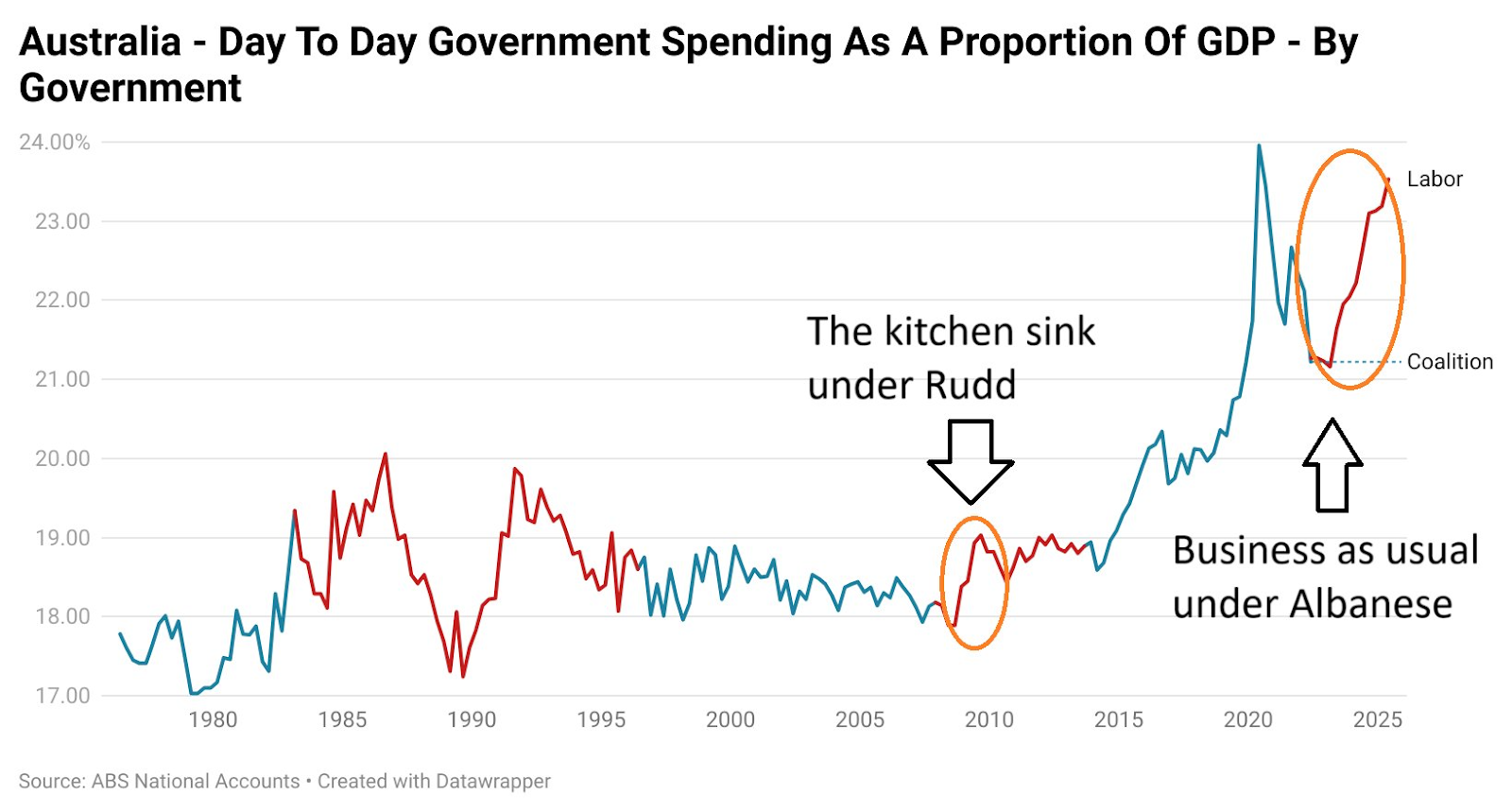
I was disappointed that none of the media at the press conference followed up with a question about how record government spending is fuelling that demand and even luring tradies away from building sites to infrastructure and renewable energy projects.
Frankly, state and federal governments need to take some of the blame for fuelling the demand which is keeping inflation high and blocking interest rate cuts.