





















Despite a fall in unemployment and a strong increase in job creation, this hasn’t had a huge impact on wages.
The Reserve Bank continues to remind us that wages can be a major driver of inflation but the latest figures show wage growth is bang on what the RBA is forecasting.
The numbers
The Wage Price Index rose by 0.77 per cent in the September quarter – the slowest quarterly pace since the March quarter in 2024. It was slower than the previous quarter and lower than market forecasts.
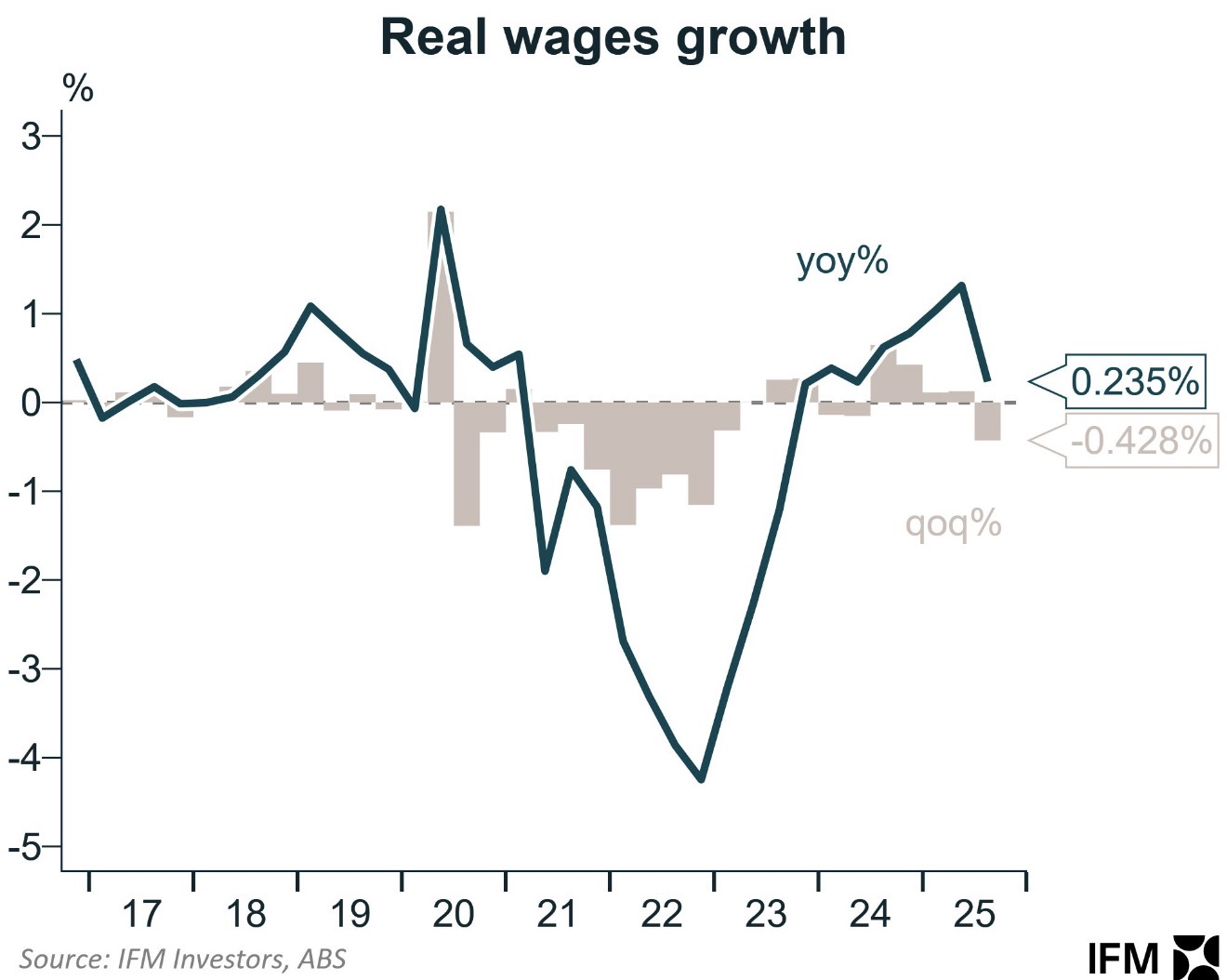
Annual pay growth was steady at 3.41 per cent in the September quarter which, when taking into account inflation, meant real wages fell 0.43 per cent … although it’s up 0.24 per cent for the year.
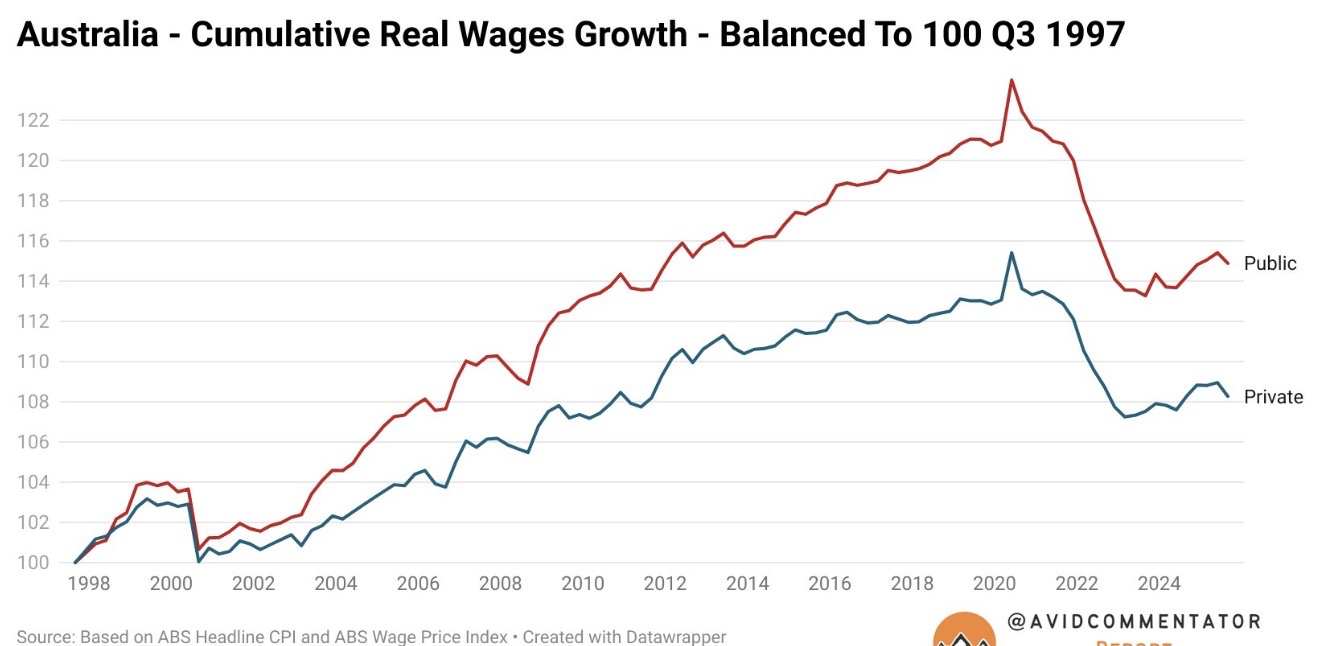
Government jobs saw wage growth rise 0.88 per cent in the quarter – the strongest pace since June 2024. By contrast, private-sector wages increased by just 0.71 per cent, the slowest growth since June 2022.
That’s a notable gap, and it helps explain the shortage of tradies and home-building workers, who are increasingly being lured into higher-paying government jobs.
The salary winners
So where were the big pay rises?
On an annualised basis, public administration and safety (+4.3 per cent), health care and social assistance (+3.8 per cent) and education and training (+3.6 per cent) led the way. Other sectors where capacity is more strained also grew strongly, including mining (+3.6 per cent), construction (+3.4 per cent) and real estate (+3.3 per cent). Wage growth was slowest in financial and insurance services (+2.5 per cent), retail trade (+2.8 per cent) and accommodation and food services (+2.9 per cent).
RBA on watch
After months of economic data showing a weakening jobs market, October saw the most jobs created in six months – the biggest employment growth since April (42,200 positions created in October, from September’s 12,800).
It certainly justifies the RBA’s decision to keep interest rates on hold for the foreseeable future.
The RBA has two pillars to its charter: Keep inflation low and keep Aussies in jobs.
By monitoring employment, the RBA assesses if it is achieving maximum employment while keeping inflation within its 2-3 per cent target range.
It’s a tricky balancing act, because the two goals don’t always move together. For example, when the labour market is tight — meaning unemployment is low — businesses often need to lift wages to attract staff. Higher wages can then increase business costs, which may flow through into higher prices and, in turn, higher inflation.
Nominal wages are the dollar amount on your payslip, while “real” wages reflect how far that money actually goes once inflation is taken into account.
So the RBA constantly weighs up the trade-offs between low inflation and full employment, using interest-rate settings to find the right mix.
It’s also worth remembering that wage growth is only one of many things that can push prices up – and over the past couple of years, it hasn’t been the main culprit. Supply-chain disruptions, rising rents and energy costs, and the way some businesses have been setting prices have generally played a bigger role in Australia’s inflation than wages have.
Also, and as I always say, the government could be doing a lot more to help keep inflation in check. Attracting workers with higher pay than the private sector is offering – is an example. This and overspending.