




















The red flags of an economic downturn are flying high.
As the conflict in the Middle East continues, Australian eyes are firmly on the economic fallout. We’re already feeling it through eye-watering fuel prices, which will flow through into higher costs across the economy.
But now there are two major warning signs that we could easily fall into economic hot water.
Warning sign one – IMF horoscope
Global economic think tank, the International Monetary Fund (IMF), has begun recalibrating its forecasts for global growth as a consequence of an extended Middle East conflict.
The IMF has ou0tlined three scenarios for the world economy, with the most severe described as “a close call for a global recession, which has happened only four times since 1980.”
The baseline scenario has been downgraded by 0.2 percentage points to 3.1 per cent growth this year. Under its “severe” scenario, annual growth falls from the current 3.4% per cent to 2 per cent this year, while inflation rises to 6 per cent.
For comparison, that would mark an economic downturn on par with the Global Financial Crisis and the COVID-19 pandemic.
Closer to home, its base case for Australian economic growth has been downgraded to 2 per cent this year and 1.7 per cent next year (from its previous forecasts of 2.1 per cent and 2.2 per cent respectively). It expects Australian inflation to hit 4 per cent this year and 3.2 per cent next year.
Under the worst case scenario, the Australian economy would slide into economic recession.
Warning sign two – plummeting consumer confidence
I often say that people see the economy as this big inanimate object, rather than a reflection of the living breathing human beings who drive it. Economies are a mirror of our behaviours and confidence.
And it’s fair to say, the Middle East crisis is spooking all of us as consumers and also our bosses. That’s dangerous, because if we all stop spending and our bosses stop hiring and investing, the consequences can be devastating for the economy.
That is why the latest consumer and business sentiment data is a real worry … it reveals there has been a collapse since the outbreak of conflict in the Middle East sent oil prices skyrocketing.
Business confidence recorded the second biggest monthly fall in the 37-year history of the NAB Business survey, while consumer confidence numbers plunged to near-historical lows in the largest drop since the start of the pandemic.
The Westpac-Melbourne Institute survey showed the consumer sentiment index plunged 12.5 per cent to 80.1 points in April, with household finances weighed down by record spikes in fuel prices and a further 0.25 per cent rise in interest rates handed down by the RBA.
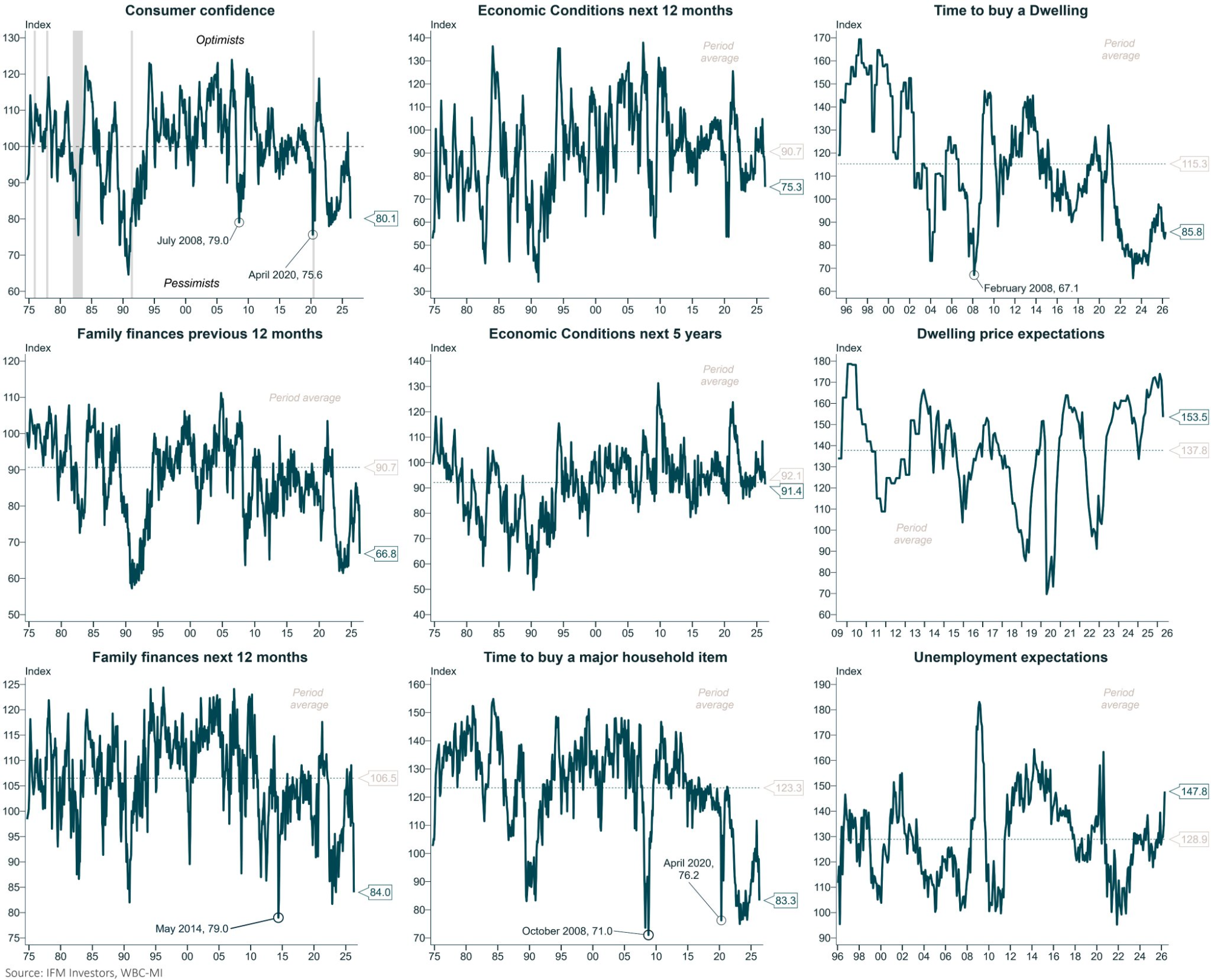
But look at the breakdown of the figures. And remember this downturn has mainly occurred since the oil price hikes just six weeks ago. The outlook for things like ‘family finances’, ‘time to buy a major household item’ and ‘time to buy a house’ are all heading toward record lows.
Consumers are in the bunker as global uncertainty escalates.
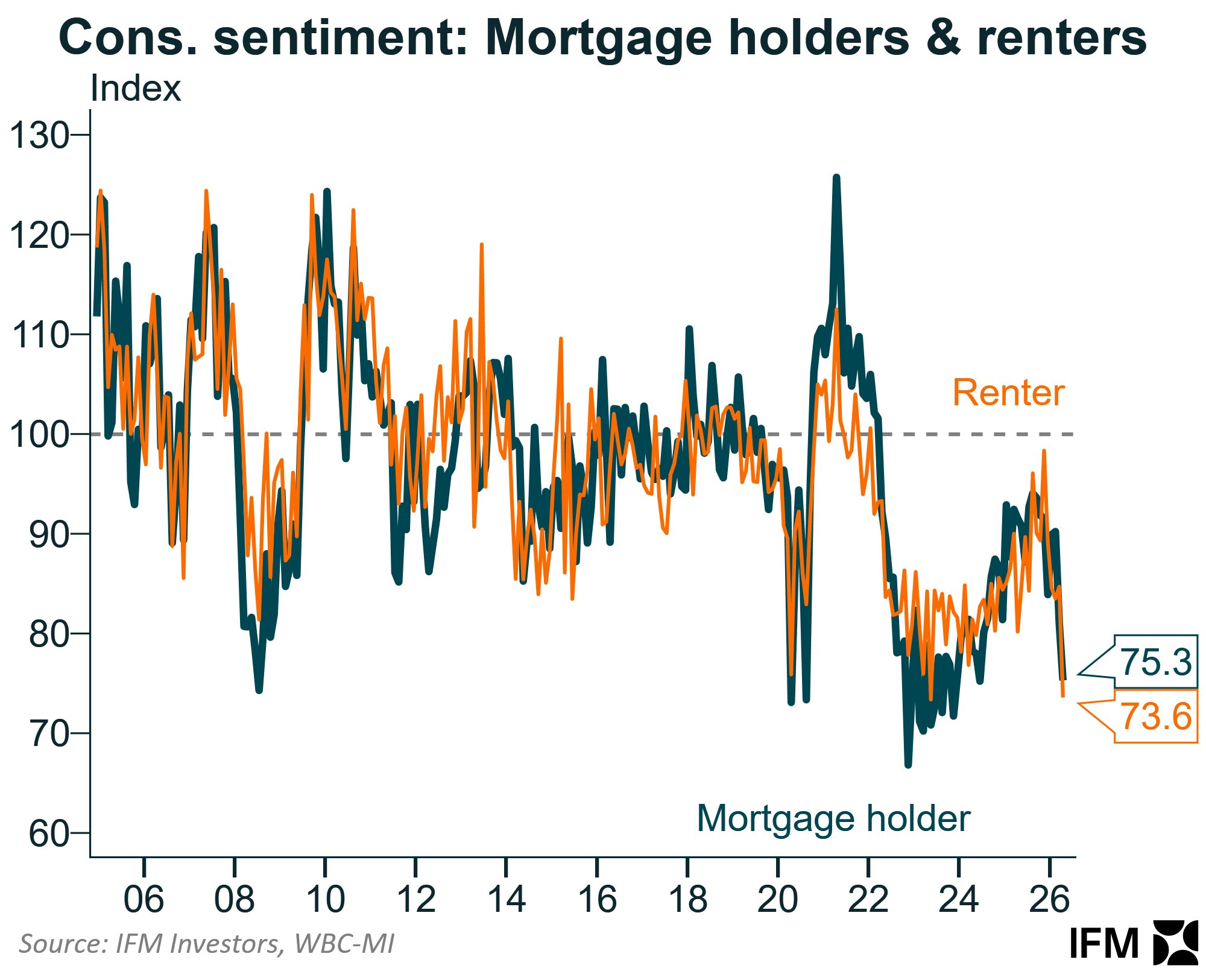
It’s no surprise mortgage holders and renters are feeling the most dismal. Being hit by rising loan repayments and fuel costs is taking a big chunk of their disposable income.
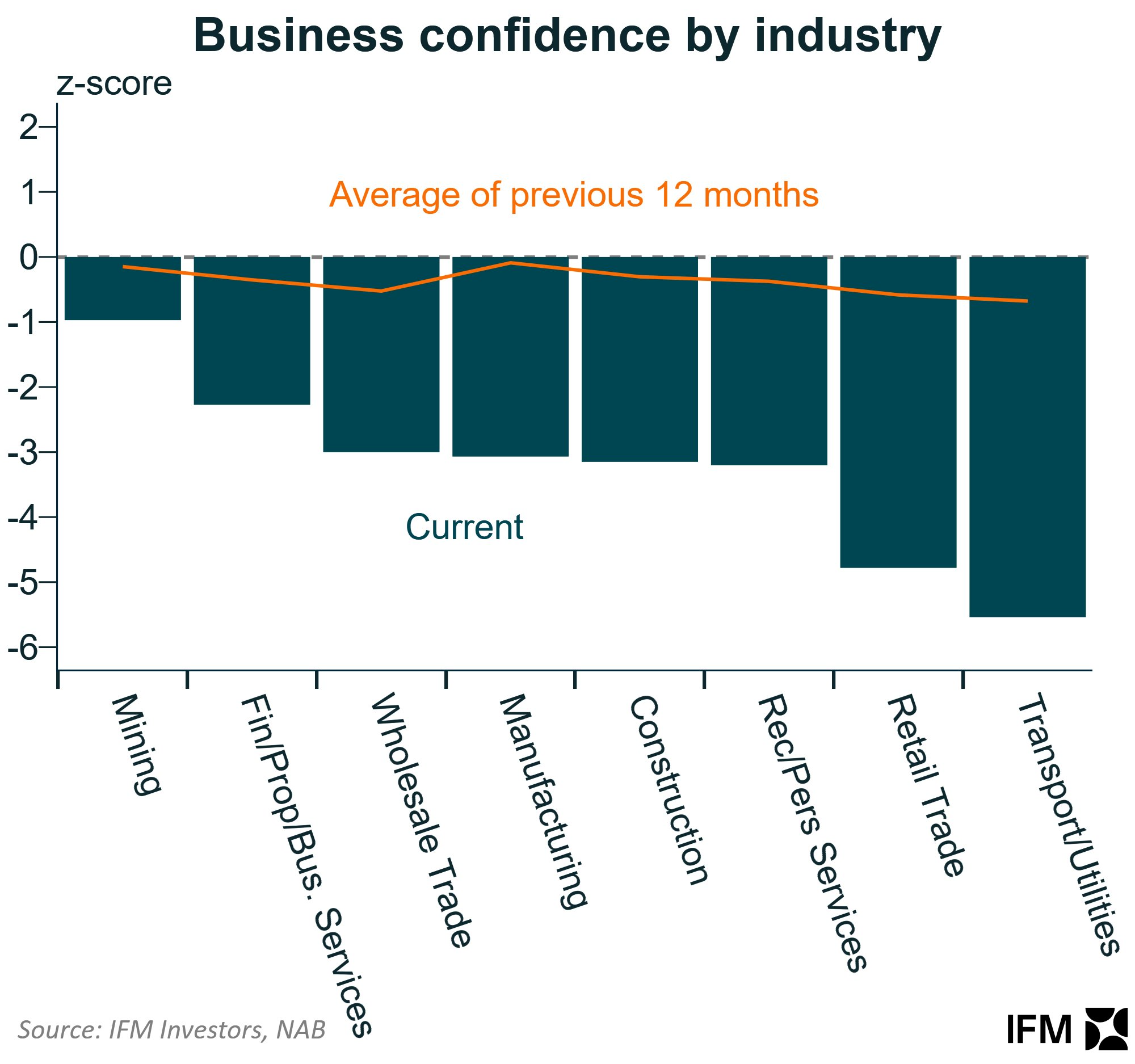
Confidence within industries often drives employment and spending, so this graph shows where business confidence has been hit hardest. The implication is that these industries could potentially cut their workforce.
The outlook?
As for how the data will look in reality as time rolls out, we’ll have to wait and see.
But so far, we can’t be too surprised if we see rising inflation, reduced consumer spending, job losses, and, if things get more heated, an economic recession.
Let’s hope not.